The Remarried Empress (2026): Empress Turns the Tables
Empress Navier demands the right to remarry rival Prince Heinrey as the price for granting Emperor Sovieshu his divorce in The Remarried Empress (2026).
November 7, 2026
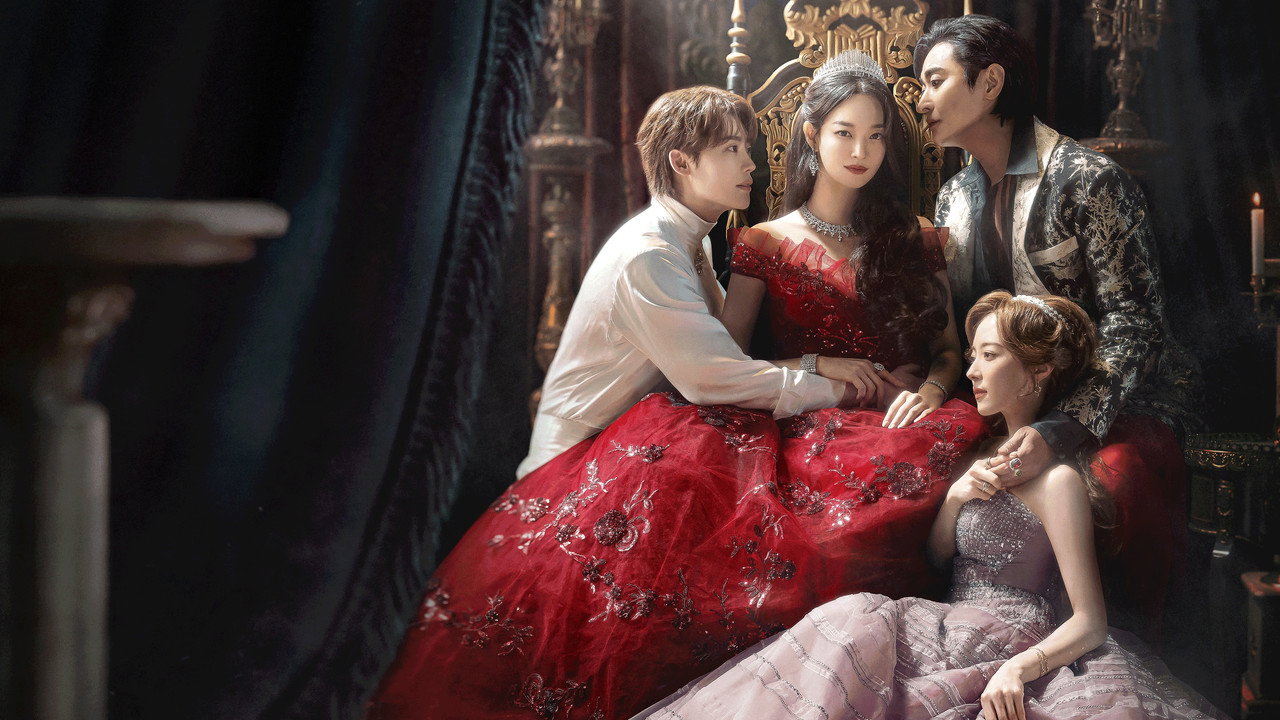
The Ending, Explained
The 2026 television event The Remarried Empress arrives with a curious genre label—Drama, Sci-Fi & Fantasy—and a creative team led by director Jo Soo-won. The principal cast includes Shin Min-a, Ju Ji-hoon, Lee Jong-suk, and Lee Se-young, all of whom carry the weight of a story adapted from a published web novel. Even with only fourteen recorded votes, the project holds an impressive 8.643/10 score, signaling that early audiences connect with its unhurried approach to palace life. This article deliberately avoids the opening movement of the narrative; instead, we examine the closing movement and what it signifies. Navier’s decision surprises the court, and The Remarried Empress ending explained confirms her autonomy. The promotional tagline, “I accept this divorce and I request an approval of my remarriage,” already tells attentive viewers that the final confrontation will be waged through law and protocol rather than swordplay. By keeping the first act out of view, we protect the discovery of how the Eastern Empire’s routines are established before they are overturned.
Web novel adaptations have carved a steady path in recent television, and this entry fits the trend by transporting a written romance into a visual imperial setting. The fantasy label may hint at slight speculative touches within the court, but the emotional engine is the personal transformation of the lead character. Keeping the explanation anchored on the ending lets newcomers appreciate the payoff without wading through the establishment of traditions that the story later subverts.
For those who appreciate meticulous reconstructions of imperial administration, a companion watch might be Rookie Historian Goo Hae-Ryung. That series also situates a strong female perspective inside bureaucratic halls, using court ceremony as a backdrop for quiet defiance. The two titles make a rewarding double feature for streaming nights.
What Happens
Progressing toward the latter half of the season, the political machinery of the Eastern Empire grinds against personal desire. Without recapping the earliest episodes, we can state that the central conflict crystallizes when a marital dissolution is proposed. A slow burn precedes the climax, and The Remarried Empress end happens with a royal decree that reorders alliances. The court erupts in debate, and Remarried Empress divorce condition changes everything. Specifically, the allowance for the empress to seek a new union with a neighboring prince becomes the mechanism that resolves the standoff. We see the emperor’s initial demand met not with submission but with a counter-request that exploits the logic of the imperial court. The final act therefore does not introduce new locations or sudden battles; it concentrates on chambers, petitions, and the calculated wording of approval. Such restraint gives the conclusion its distinctive texture within the crowded field of kingdom stories.
The precision of the concluding paperwork should not be underestimated. In a world where social status governs every alliance, the written approval of a remarriage functions as both shield and weapon. The narrative smartly avoids spectacle, allowing the audience to sit with the consequence of words spoken in a throne room. This is where the show’s drama roots itself—not in action, but in the ripple of a single clause.
Viewers drawn to the idea of rival monarchies intersecting will find a thematic cousin in The King: Eternal Monarch. There, the crossing of borders between separate realms fuels the tension, much as the Western Kingdom’s prince looms over the later negotiations here.
The Meaning Behind the Ending
The finale feels abrupt, but The Remarried Empress ending meaning resonates with viewers who value character agency. Rather than a simple romantic payoff, the conclusion underscores social status and the right to self-determine within rigid hierarchy. Navier’s move is less about revenge and more about rewriting the rules of an arranged marriage system that treated her as property of the state. The empire shifts alliances, and The Remarried Empress explained reveals the cost of pride. In this light, the last scene is a quiet triumph of policy over passion. The fantasy element implied by the genre tag may accentuate the distance between the two kingdoms, but the emotional core remains firmly human: a woman who refuses to vanish after a divorce. The ending thus means that restoration of identity, not reunion, is the true victory.
When we consider the tagline again, the request for remarriage approval is not a plea but a declaration of equivalence. The emperor sought to lower her standing; the final act returns her to a position where she can choose her own partner. That cycle of diminishment and reclamation forms the thematic spine of the closing minutes.
Many stories about royalty end with a wedding; this one treats the dissolution of a marriage as the true turning point. By doing so, it reframes the usual romance arc and asks what independence looks like when jewels and titles are at stake. The ending’s meaning thus extends beyond the screen, touching on contemporary conversations about equitable separation.
Themes You Might Have Missed
Beneath the romance and palace intrigue, the script threads commentary on adultery, forbidden love, and revenge. The imperial court is shown as a stage where every gesture carries weight. The narrative can feel complex, yet The Remarried Empress explained in the last chapters becomes a tale of self-determination. Observant viewers will note how social status dictates the limits of each player, and how the web novel source leans into fantasy elements to stretch those limits. Arranged marriage is not merely a backdrop but the cage that the protagonist picks open. Meanwhile, the theme of kingdom loyalty tests the bonds between the Eastern Empire and the Western suitor. Even the secondary cast, including the performances of Ju Ji-hoon and Lee Se-young, reflect the friction between personal feeling and public duty. The show’s sci-fi/fantasy shading permits a slightly enlarged scope, suggesting that the power of remarriage transcends ordinary court scandal.
Revenge simmers as a motif, yet it is tempered by the procedural nature of the court. The emperor’s transgression and the empress’s response create a balance where punishment is delivered through statute rather than violence. Such restraint elevates the palace intrigue from petty squabble to calculated statecraft, rewarding viewers who listen closely to dialogue.
If the cross-border affection resonates, Outlander presents a similarly forbidden connection that spans eras and customs, making it a fitting next watch after the empress secures her footing.
The Bottom Line on The Remarried Empress
Jo Soo-won’s production stands out for treating divorce not as scandal but as negotiation. The cast delivers restrained performances that suit the courtly tone, and the sci-fi/fantasy coating gives the familiar kingdom setting a new sheen. Early ratings suggest the approach lands, with 8.643/10 reflecting a small but enthusiastic crowd. Whether you arrive for Lee Jong-suk or for the source material, the final act rewards patience. The series invites discussion because its ending does not close the book on love; it opens a new contract. For a free streaming blog audience, this title represents a smart pick when you want intricate palace politics without sacrificing a modern sense of agency. The careful writing ensures that even viewers who skip the first act will grasp the stakes by the time the divorce condition is invoked.
On a free streaming platform, a title like this offers lasting value because the layered dialogue invites rewatch. The first viewing may track the romance; the second reveals how each minor courtier reacts to the divorce condition. That depth is rare in episodic fantasy, and it positions The Remarried Empress as a thoughtful addition to the catalog.
The Remarried Empress Quick Facts
- Release year: 2026
- Genre blend: Drama, Sci-Fi & Fantasy
- Director: Jo Soo-won
- Current rating: 8.643/10 across 14 votes
- Tagline: “I accept this divorce and I request an approval of my remarriage.”
- Lead performers: Shin Min-a, Ju Ji-hoon, Lee Jong-suk, Lee Se-young
- Source material: Adapted from a web novel
- Key themes: adultery, emperor, arranged marriage, forbidden love, kingdom, imperial court, revenge, romance, divorce, social status, palace intrigue
- Central plot hook: Empress agrees to divorce only if she may remarry the Western Kingdom’s prince.