The Gilded Age (2022): Manners, Money, and Marian's Choice
A drama set in 1882 New York, where Marian Brook navigates high society and must choose between convention and her own path.
November 26, 2026
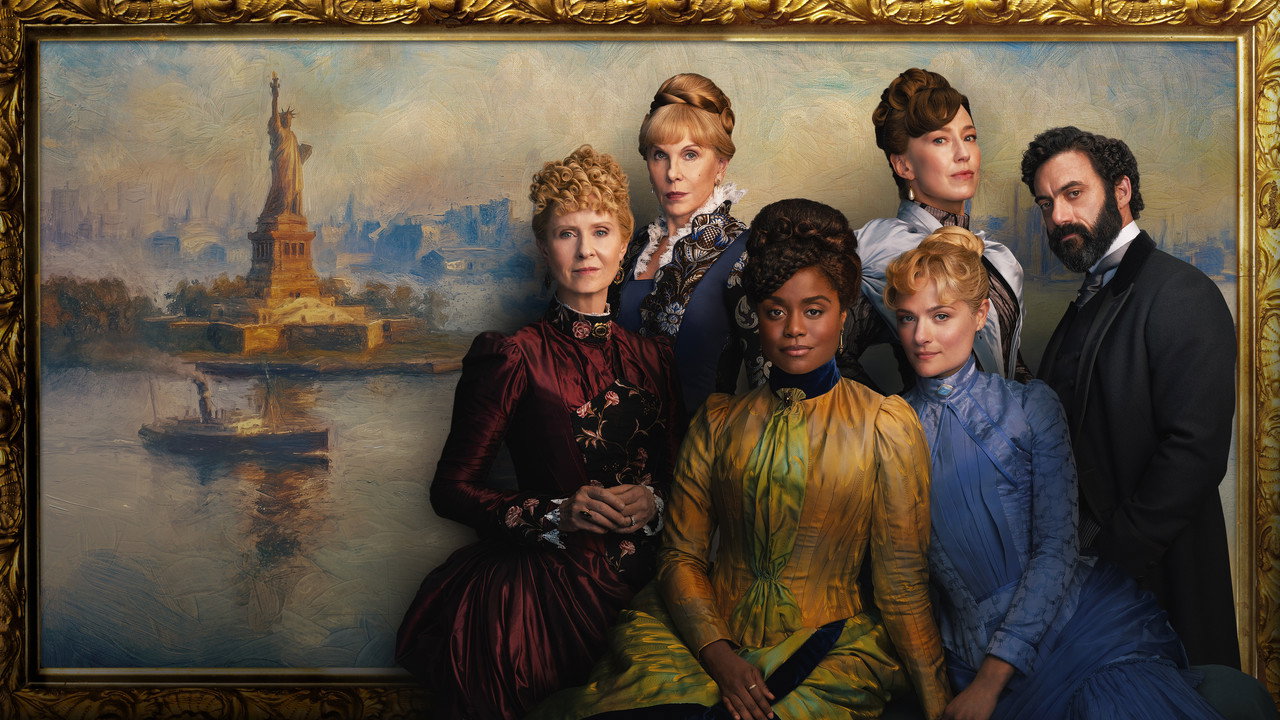
The Ending, Explained
Julian Fellowes built his reputation on drawing rooms where the sharpest weapon is a well-timed silence, and this series carries that tradition into 1880s Manhattan. When viewers ask for The Gilded Age ending explained, they usually want to know whether the season closes with a wedding, a ruin, or a quiet stalemate. The honest answer is that the finale is less a single shock than a settling of accounts: alliances harden, a few masks slip, and the audience is left watching a world rearrange itself around money that has not yet learned manners.
If you are new to the show, the closing hour will not spoil the opening for you. What matters is the shape of the journey, not a gotcha twist. There is no cliffside reveal, no secret twin, no last-minute deathbed confession. Instead, the final episode gathers the threads the season has been pulling and ties them into a knot that feels earned rather than engineered.
What Happens
The broad answer to what happens at the end of The Gilded Age is that the social war reaches a temporary truce. The two camps that have circled each other all season — the old families who inherited their fortunes and the newcomers who built theirs — finally sit in the same rooms, and the results are neither victory nor defeat. Marian finds herself at a personal crossroads, forced to weigh the security of convention against the pull of her own judgment, and the choice she makes is small in scale but large in implication.
Peggy's arc reaches a point of reckoning with her family and her past. The series has always treated her as more than a sidekick, and the finale respects that by giving her decisions their own weight. Meanwhile the financiers at the center of the story make moves that ripple outward, and the women who run the social machinery — the aunts, the doyennes, the hostesses — discover that taste and lineage are not the only currencies in circulation.
No one is destroyed. That is the point. The finale leaves every major figure standing, but standing in a slightly different place than where they began, which is how this kind of drama prefers to operate.
The Meaning Behind the Ending
When people discuss The Gilded Age ending meaning, the temptation is to look for a moral verdict — who was right, who was humbled, who won. The show resists that. Its closing note is that the old aristocracy and the new money are not opposites so much as mirror images: one group protects its position through inherited rules, the other through freshly printed leverage, and both are equally ruthless about protecting what they own.
The final act is significant because it refuses to let either side claim the high ground. The audience is invited to notice that the "correct" families are hypocritical and the "vulgar" newcomers are sometimes the more generous people in the room, and that this cuts both ways. The ending is not a moral victory for anyone; it is an observation that a society in transition rarely notices it is changing until the change is already complete.
That is also why a straightforward The Gilded Age finale recap tends to frustrate fans looking for a definitive resolution. The season ends on a pause, not a period. The social order has been nudged, not overturned, and the next season would pick up in a world where the newcomers are a little more settled and the old guard is a little more nervous.
Themes You Might Have Missed
The surface pleasures are obvious — costumes, ballrooms, sharp remarks over tea. But the series keeps returning to a handful of ideas that reward a second look.
- Class as performance. Every character is playing a role: the aunts perform propriety, the newcomers perform legitimacy, and Peggy navigates a performance society has thrust upon her. Manners are a language, and fluency buys entry.
- Ambition is gendered. The men build empires of steel and rail; the women build empires of invitations and seating charts. The show refuses to rank one as more serious than the other.
- The price of progress. Railroad money, industrial expansion, and the machinery of the modern city are all present, and so is the question of who pays for it. The glitter has a cost, and the finale quietly acknowledges that.
- Family versus self. Marian's central tension is between duty to the aunts who took her in and the right to choose her own path. It is the oldest story in period drama and still the most reliable engine.
If you enjoy this upstairs-downstairs dynamic done with a different accent, the historical drama Jamestown follows a similar interest in status and survival, while The Buccaneers takes the same "new money invades old society" tension and points it across the Atlantic. Readers who prefer the modern version of the same appetite for power and spectacle might try Dynasty, which trades corsets for shoulder pads but keeps the same appetite for family warfare.
Our Rating for The Gilded Age
We rate this one 7.7 out of 10. The ensemble is the draw — Carrie Coon and Morgan Spector give the moneyed newcomers real gravity, Louisa Jacobson anchors the quieter emotional thread, and Denée Benton is the reason to keep watching — and the writing trusts its audience to find tension in a snub rather than a shootout. The pacing is patient, sometimes too patient for viewers raised on faster melodrama, and the reward is a portrait of a society learning to bow to a new kind of power. Anyone asking The Gilded Age explained in a sentence: it is a costume drama about manners, money, and the exact moment the rules stopped working.
The Gilded Age Highlights
The moments that linger are less about plot than about friction. A hostess deciding where to seat a guest in order to declare war. A financier discovering that charm can buy a room but not a reputation. A young woman choosing her own judgment over the instruction she was raised to obey. These scenes work because the show understands that in 1882 the stakes of a party invitation were genuinely civilizational — a new class was writing itself into the guest list of the country, and the old one was deciding whether to answer the door.
It also looks exquisite in the way period drama is supposed to: rooms that feel lived in, costumes that carry status in every stitch, a city on the edge of the modern era. The tagline asks what your family is worth, and the season spends its running time answering with a question of its own: worth measured by whom? That is the thread to hold onto when the finale ends, because the show is not really about who wins the season. It is about which version of society gets to define the next one.