Star Trek: Voyager (1995)
Pulled to the far side of the galaxy, where the Federation is 75 years away at maximum warp speed, a Starfleet ship must cooperate with Maquis rebels to find a way home.
October 25, 2026
The Ending, Explained
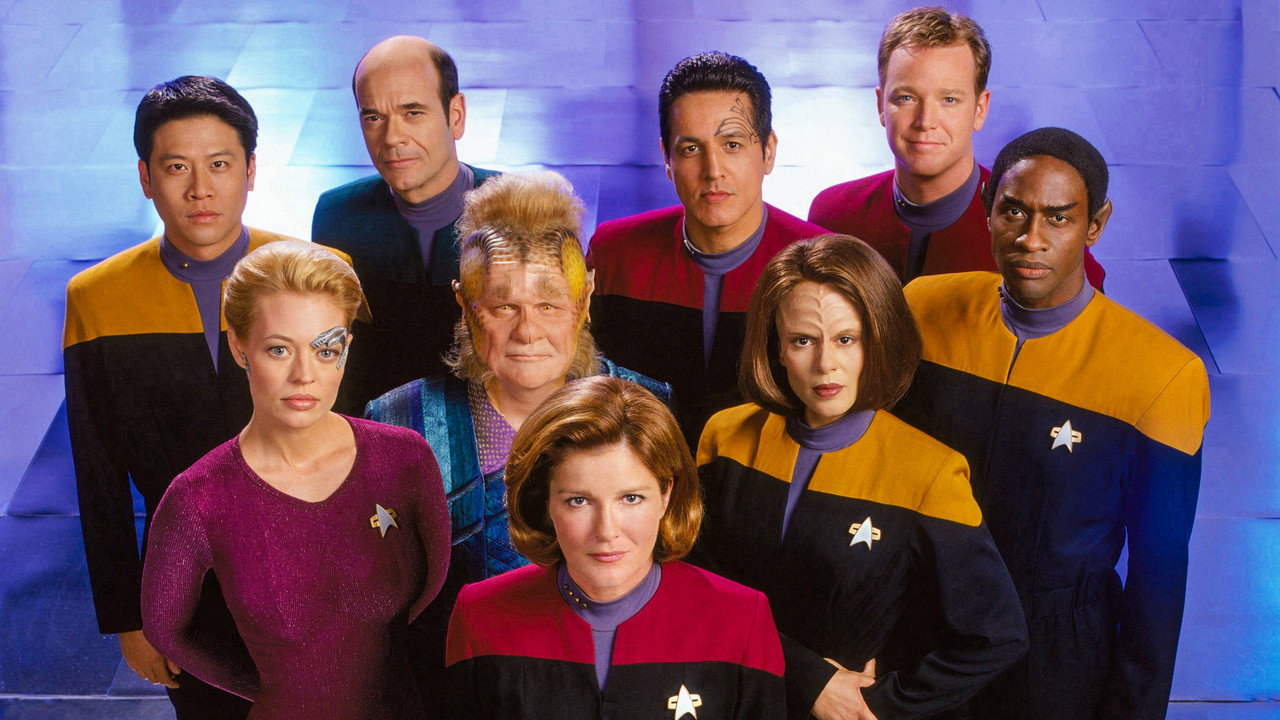
Many longtime viewers arrive at the finale with a simple question: they want a clear Star Trek: Voyager ending explained that respects the show's slow-burn storytelling. The series never relied on a single twist to close its story. Instead, it followed a Starfleet vessel yanked to the distant edge of the galaxy, where the Federation lies roughly seventy-five years away at maximum warp. The crew, forced to unite with Maquis rebels, spends years learning that the mission home is also a test of character. The ensemble, featuring Kate Mulgrew at the helm, grounds the sci-fi premise in human stakes. Without revealing the early incidents that stranded them, we can focus on how the final act delivers a meditation on perseverance rather than a tidy reset.
The last stretch of the journey reframes the tagline "Charting the new frontier" as something internal. Space travel here is not just movement across stars; it becomes a way to measure growth. The holographic physician, the alien companions, and the former opponents turned shipmates all illustrate that a spacecraft is defined by its people. When the ending arrives, it feels earned because every light-year was contested by circumstance.
What Happens
To follow what happens Star Trek Voyager end, picture a vessel originally facing a seventy-year cruise at top speed. Along the route, the mixed crew meets countless civilizations. Some become enemies, others offer crucial assistance. A defining mid-to-late storyline involves an Ocampan crew member whose species normally lives brief lives; she evolves beyond her natural limits and bends space to grant the ship a ten-year shortcut, leaving roughly fifty-five thousand light-years left to cover. Later encounters provide further jumps forward.
By the closing episodes, the group nears the Alpha Quadrant, but the narrative avoids a pure victory parade. The finale acknowledges losses, changed identities, and the reality that the galaxy they left is not the one they return to. The cooperation between Starfleet and Maquis becomes the true engine of survival, showing that a shared mission can overwrite old hostilities.
The Meaning Behind the Ending
Understanding the Star Trek: Voyager ending meaning requires looking past coordinates. The show suggests that "home" is less a place than a practice of mutual care. A hologram serving as medical officer symbolizes how artificial life earns personhood through duty. Alien contact episodes throughout the run train the crew to listen before acting, and that lesson pays off when old rivals must trust one another.
The speculative premise lets the writers ask whether humans and aliens can forge a single community aboard a single spacecraft. The final act answers with cautious hope. It also nods to the theme of time warp as patience: the crew cannot skip the years, so they must fill them with purpose. In that light, the ending is not about arriving; it is about who the travelers became while navigating the dark.
Themes You Might Have Missed
A thoughtful Star Trek: Voyager explained walkthrough reveals quiet motifs. The obvious space opera surface hides a steady focus on mission logistics: fuel, moral choices, and limited resources. Time warp operates as both plot device and metaphor for delayed redemption. Hologram technology questions what qualifies as life. Space itself is treated as a character—vast, indifferent, yet full of alien planets that challenge the crew's assumptions.
Alien contact frequently doubles as diplomacy training, while the galaxy setting encourages speculative thought about governance and freedom. Many Star Trek Voyager fan theories emerge from these threads, debating whether the voyage altered the Federation's future or simply matured a single ship. Such theories keep the text alive because the ending leaves room for interpretation about cultural change.
Star Trek: Voyager: The Bottom Line
Our streaming blog recommends this title for anyone who likes character-driven science fiction. If you appreciate the ensemble dynamic here, you should sample Star Trek: The Next Generation, which builds a similar optimistic vision of space exploration. For a darker, politically layered counterpart, Babylon 5 presents a station-bound saga with comparable themes of unlikely alliances. Those wanting animated galaxy-spanning conflict can turn to Star Wars: The Clone Wars, where spacecraft and alien races drive a long-form war story. All three expand on ideas of cooperative survival far from home.
The combination of drama, action, and speculative wonder makes Voyager a standout. Its 7.777 out of 10 rating from 1175 votes reflects a devoted audience that values slow revelation over quick payoff. The cast led by Kate Mulgrew delivers performances that ground the fantastical elements in real emotion.
Star Trek: Voyager Quick Facts
- Original release: 1995
- Genre blend: Sci-Fi & Fantasy, Drama, Action & Adventure
- Core premise: A Federation ship cooperates with Maquis rebels after being pulled to the far side of the galaxy, 75 years from home at max warp
- Tagline: Charting the new frontier
- Key themes: time warp, spacecraft, hologram, space travel, galaxy, space, alien, alien planet, mission, alien contact, space opera, speculative
- Lead performers: Kate Mulgrew, Robert Beltran, Roxann Dawson, Robert Duncan McNeill, Ethan Phillips, Robert Picardo, Tim Russ, Jeri Ryan
- Community score: 7.777/10 across 1175 votes
Whether you treat the show as comfort viewing or as a puzzle to analyze, the finale offers a satisfying echo of its opening isolation. The journey from a stranded spacecraft to a united crew remains a template for modern space opera storytelling.