Sacrifice (2026): A Star's Night of Chaos
A movie star's existential crisis turns violent when a radical warrior hijacks a charity gala in Sacrifice (2026).
October 21, 2026
The Ending, Explained
After the lights come up, the phrase Sacrifice ending explained captures what many viewers seek, because the final minutes deliberately withhold the easy resolution that modern blockbusters often provide. The film, directed by Romain Gavras, runs a tight hundred minutes, yet the closing act opens up a philosophical space rather than closing it.
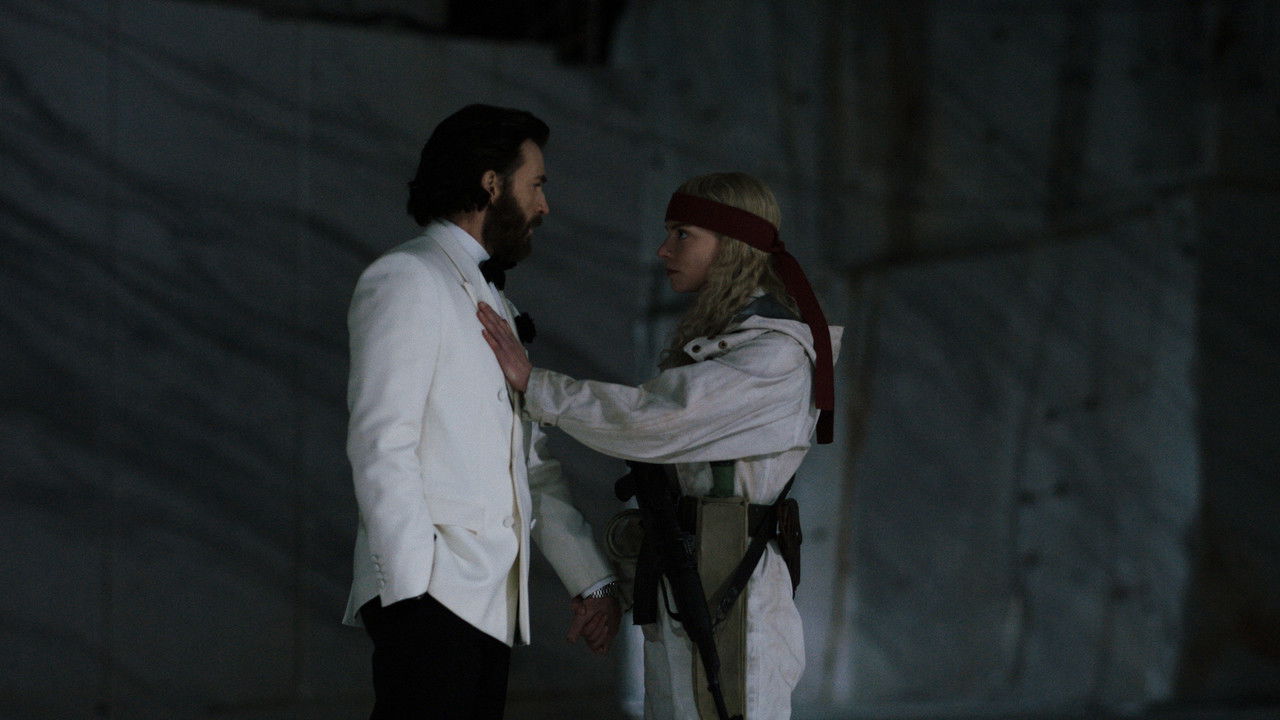
Without revealing how the night of celebrity excess begins, it is fair to say that the conclusion forces the central movie star, played by Chris Evans, to confront the hollowness of his own persona. The existential crisis that has been building finds its outlet not in a typical hero moment but in a quiet realization that belief and performance have become indistinguishable.
The rating of 5.034 out of 10 across fifty-nine early votes shows that this ambiguity divides audiences. Some want a cleaner action comedy; others appreciate that the finale respects their intelligence. The surreal elements that dominated the middle portion settle into a strange calm, suggesting that the chaos was always internal.
Anya Taylor-Joy's radical warrior remains consistent to her own code even as the gala collapses around her. That consistency is what makes the ending feel earned rather than random. The film trusts you to piece together the meaning of salvation and sacrifice on your own.
The adventure comedy action labeling might suggest a lighthearted romp, but the film's tone stays provocative. Romain Gavras uses the hundred-minute canvas to probe how a celebrity reacts when stripped of scripted life. The result is a finale that rewards close attention.
What Happens
We can describe what happens at end of Sacrifice only after noting the context of the night's strange transformation. The movie star and the radical disciples are no longer simply opposing forces; they become participants in a shared ritual that none of them fully control.
The title Sacrifice explained reveals a rich man and a group of uncompromising believers trading roles of captor and captive in a psychological sense. The charity benefit that framed the evening mutates into something resembling a self-fulfilling prophecy, where the fear of violence summons the very transformation the activists sought.
Chris Evans anchors the mayhem with a performance that balances panic and curiosity. Vincent Cassel and Salma Hayek Pinault deliver supporting turns that keep the tone grounded even when the situation grows absurd. The camera work during the final sequence emphasizes faces over explosions, a choice that underscores the intimate scale of the conflict.
Anya Taylor-Joy's presence as the radical warrior gives the upheaval a magnetic center. Her followers, the disciples, treat every command as scripture, which makes the later moments eerie rather than comedic alone.
If you enjoy comedic road trips through absurdity, you might also appreciate Jay and Silent Bob Strike Back, which sends its stoner heroes on a chaotic journey fueled by pop-culture satire. While that film laughs more freely, both share a willingness to let characters wander into nonsense.
By the final curtain, the line between staged spectacle and genuine conviction has dissolved. The movie star's existential crisis is not solved by escaping the room but by understanding the role he has played his entire life.
The Meaning Behind the Ending
Understanding Sacrifice ending meaning requires treating the film as a satire of modern faith, both religious and secular. The radical warrior and her followers operate under a logic that seems incomprehensible from the outside, yet internally it is as structured as any doctrine. This mirrors how the cast commits to the absurdity without winking at the camera.
Salvation and sacrifice, the two words in the tagline-less promotional material, are presented as intertwined rather than opposed. The protagonist's inward journey suggests that true sacrifice requires giving up the empty speeches of a charity gala and embracing a messier truth. The outward adventure is simply the canvas for that realization.
The charity benefit setting, with its empty speeches and billionaire attendees, is not just backdrop but a character itself. When the night descends into chaos, the contrast between polished smiles and raw conviction drives the theme home.
We see echoes of this approach in Dogma, a earlier comedy that took angelic dogma seriously enough to find humor in its contradictions. Sacrifice similarly respects its own mythos, which is why the third act never feels like a cop-out.
John Malkovich and Charli xcx, though not central to the finale, punctuate the background with reminders of celebrity emptiness. Their presence reinforces the theme that disciples of fame are no less devout than disciples of ideology. The rating may be middling, but the craft is high.
Themes You Might Have Missed
Beneath the surface action, the Sacrifice gala hostage dynamic serves as a lens for examining self-fulfilling prophecy. The mere anticipation of radical disruption creates the conditions for it, meaning the hosts of the charity benefit inadvertently author their own downfall through their assumptions about the poor and the angry.
Another subtle thread is the unlucky rich man motif. The movie star believes his wealth grants immunity, yet the night proves otherwise. This satire is gentle in humor but sharp in observation, akin to the tonal balance found in The Matrix Resurrections, where chosen-one tropes are questioned rather than celebrated.
Pay attention to the disciples' wardrobe and speech; they never drop the ritualistic language even when alone. That detail signals a community built on shared story rather than coercion. The radical leader, portrayed by Anya Taylor-Joy, follows her faith's rules absolutely, making her actions rational within the film's internal logic.
Sam Richardson and Zarene Dallas fill out the ensemble with characters that mirror the audience's confusion, grounding the surreal events in relatable reactions. The genres listed—adventure, comedy, action—each get a moment, but the comedy is dark, the action stylized, and the adventure inward.
The blend of adventure, comedy, and action is not incidental. Each genre feeds the central metaphor: the adventure is inward, the comedy is uncomfortable, and the action is stylized rather than brutal.
Sacrifice: What We Thought
Our take is that Sacrifice (2026) is a divisive but ambitious piece. The cast is fantastic: Chris Evans, Anya Taylor-Joy, Vincent Cassel, Salma Hayek Pinault, John Malkovich, Charli xcx, Sam Richardson, and Zarene Dallas all commit fully. The story is absurd, yet the production value is high, giving the wild mythology a tangible reality.
Director Romain Gavras constructs a world that is wonderfully surrealistic while retaining a sort of grounding, a balance that keeps the viewer oriented even as the rules bend. The runtime of 100 minutes feels appropriate; nothing lingers past its welcome, and the pacing supports the frenetic energy.
The surreal mythology built by the script feels internally consistent, a rarity for comedies that flirt with the absurd. That consistency allows the audience to suspend disbelief even as the gala transforms into a tribunal of sorts.
While the current rating of 5.034 from fifty-nine votes suggests mixed reception, we found the experience refreshing. It does not hand-hold, and it trusts the viewer to interpret the blur between performance and belief. For a free streaming blog audience, this is exactly the kind of movie that sparks debate in the comments.
The mixture of adventure, comedy, and action is not a generic mashup but a deliberate vehicle for satire. If you enjoy films that challenge as much as they entertain, this one earns a spot on your list.
Sacrifice Summary
Sacrifice is a 2026 adventure comedy action film from director Romain Gavras, lasting 100 minutes. It centers on a movie star in existential crisis who becomes entangled with a radical warrior and her followers during a chaotic night. The plot summary promises an inward journey and an outward adventure where the line between performance and belief blurs.
From the opening credits to the last frame, the movie refuses to separate the act of performing from the act of believing. That refusal is the key to enjoying what Gavras has assembled.
Without spoiling the first act, we can confirm that the final act recontextualizes the entire evening. Themes of self-fulfilling prophecy, satire, and the disciple mentality weave through the narrative. The ensemble cast, including Chris Evans and Anya Taylor-Joy, delivers committed work that elevates the material.
Though its rating sits at 5.034 out of 10 from fifty-nine voters, the film's craft and bold choices make it a memorable stream. It is less about explaining a twist and more about feeling the weight of salvation and sacrifice. That approach may polarize, but it never bores.