Re:ZERO -Starting Life in Another World- (2016): Transported Teen
Subaru is transported from a convenience store to another world where a silver-haired girl's kindness sends him on a quest to help her find something.
October 23, 2026
The Ending, Explained
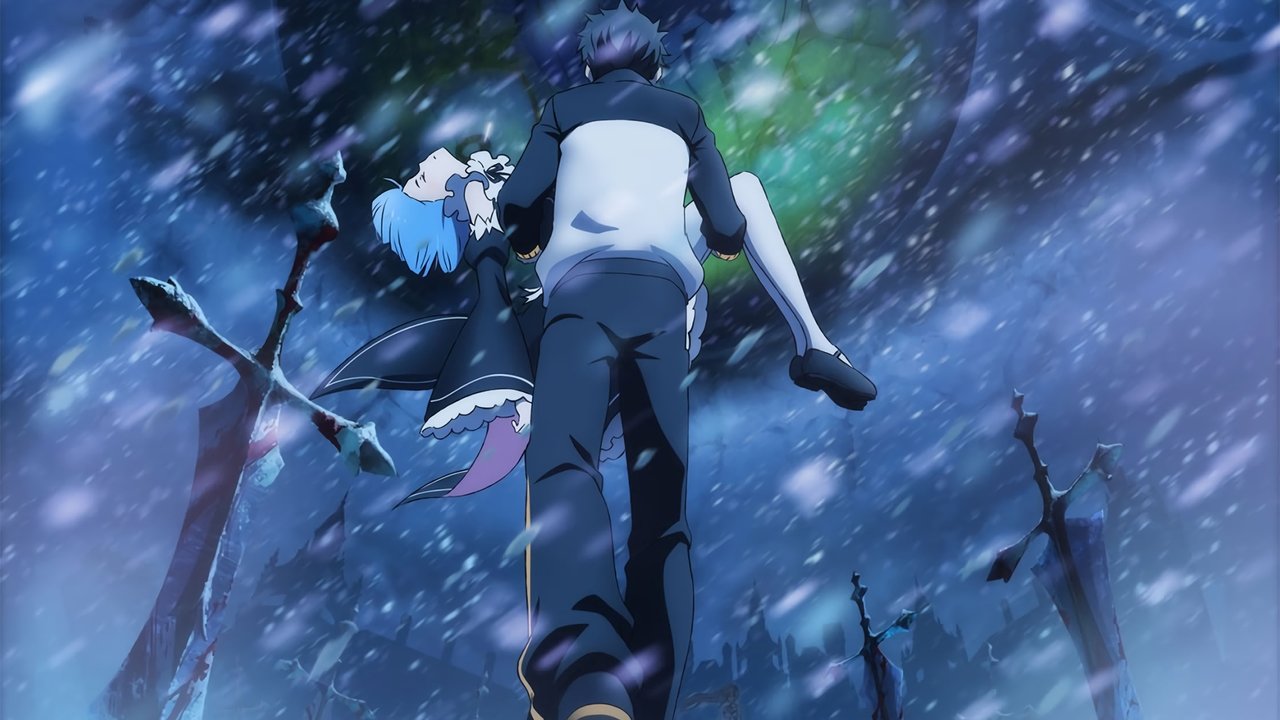
This Re:ZERO -Starting Life in Another World- ending explained article approaches the climax with deliberate restraint, avoiding any revelation about the opening convenience-store moment that transports the protagonist elsewhere. The 2016 animated project, carrying an audience score of 8.118 from 809 votes, blends mystery, action, and supernatural dread. As the story progresses beyond the initial meeting with the silver-haired girl, the narrative tightens around consequences that have been building silently. We will look at how the final act resolves the tensions constructed through Subaru's unusual circumstances. The approach here is to respect the viewer who has not yet started the series, while still offering insight into concluding themes. By focusing on structure rather than scene-by-scene recount, we keep the early episodes safe.
Without detailing the early confusion of a teenager dropped into an unfamiliar realm, it is fair to say that the conclusion rewards patience. The show's format, which unveils character habits before explaining their origins, reaches a point where every prior gesture matters. Visual storytelling reinforces emotional weight through subtle background details. The ending does not rely on a single twist but on the accumulation of trauma and small decisions. Many audiences appreciate that the resolution feels earned rather than imposed. The rating of 8.118 suggests the strategy connected with a sizable community of fans who value layered narrative.
What Happens
We answer the question, what happens at the end of Re:ZERO -Starting Life in Another World-, by focusing on broader movement rather than minute scene beats. The protagonist, Natsuki Subaru, finds that his repeated returns through death are not merely punishment but a lens on identity. The Re:ZERO Subaru loop concept drives the narrative into a space where fate and personal agency collide. By the later episodes, the silver-haired companion's search intersects with larger magical forces. The closure arrives through acceptance of loss rather than its erasure. This section deliberately avoids the first act, so readers new to the show can learn about the finale's tone without forefront spoilers.
Throughout the run, the series avoids explaining every mechanic upfront. Instead, the audience learns alongside the cast. The final stretch brings the parallel world's rules into sharper focus, showing how mutilation and gore serve the tone of tragedy. While we will not recount the initial despair Subaru felt when lost and without direction, it is clear that later events echo that vulnerability. The time loop becomes a classroom for humility. Each reset carries a psychological toll that the ending acknowledges rather than hides, and the supporting cast mirrors that burden in their own ways.
The Meaning Behind the Ending
The Re:ZERO -Starting Life in Another World- ending meaning rests on the idea that survival is not victory if the self is shattered. Subaru's journey through reincarnation-like cycles highlights the cost of clinging to outcomes. Themes of death and time travel fuse into a meditation on responsibility. When the loop finally loosens its grip, the character must reconcile with the trauma inflicted by each failure. This is less about solving a puzzle and more about acknowledging the weight of every life touched. The final act suggests that true progress requires mourning what cannot be saved.
In the broader scope, the conclusion suggests that fate can be influenced but not fully controlled. The supernatural elements—magic, mysterious entities, and the constant threat of demise—frame a story where the ordinary high school student becomes a mirror for resilience. The rating of 8.118 reflects how well this resonated with viewers seeking depth in animation. By refusing to paint repetition as harmless, the show grants dignity to every painful lesson. The ending meaning therefore extends beyond plot into ethics, asking whether any shortcut is worth the price paid by others.
The supernatural framework also invites comparison to other rebirth stories, yet the grounded portrayal of a confused teenager keeps it distinct. The silver-haired girl's role evolves from rescuer to equal, showing that partnership survives the loop's cruelty. That dynamic informs the closing tone more than any spectacle could.
Themes You Might Have Missed
Our Re:ZERO -Starting Life in Another World- explained companion considers the subtle threads woven into the background. Themes of magic and the supernatural are visible, but the quieter motif of reincarnation appears in how Subaru's mindset shifts each return. Tragedy is not just spectacle; it is a teacher. The gore and mutilation, while striking, underscore the fragility of existence in a parallel world. Below is a list of recurring ideas that gain prominence near the close:
- Magic functions as a force with hidden prices rather than free power.
- Trauma accumulates across loops and reshapes personality in lasting ways.
- Time travel here is involuntary and tied directly to mortality.
- Fate appears as a current that can be diverted slightly but not escaped.
- Death is treated as a teacher, not a reset button without cost.
Fans of cerebral fantasy may also enjoy Kokkoku: Moment by Moment, a title that plays with time in a different key. Likewise, the intricate worldbuilding of New Saga offers another take on rebirth after catastrophe. Both sit well alongside the meditation on fate found here, and they reward viewers who like to piece together rules gradually.
Another layer is the emotional realism of the cast. The supporting voices, including Rie Takahashi and Yumi Uchiyama, lend humanity to figures who could have been archetypes. The writing ensures that habits revealed early gain significance later, a technique that rewards rewatching. Even the lighter moments carry an undercurrent of impending consequence, which makes the final act land harder.
The Bottom Line on Re:ZERO -Starting Life in Another World-
The series stands as a notable entry in animation, mystery, and adventure categories. Its willingness to dwell on trauma and the repetitive nature of the Re:ZERO Subaru loop mechanic separates it from lighter isekai fare. For those who appreciate character-driven storytelling, Ascendance of a Bookworm provides a similarly thoughtful plunge into another realm. Both remind us that transformation is rarely comfortable. The 2016 release may not cover the entire source arc, yet it delivers a self-contained emotional curve that satisfies on its own terms.
While the adaptation leaves some threads for future seasons, the available narrative satisfies as a study of endurance. The mixture of action and philosophical inquiry keeps the 8.118 score understandable. Viewers who prioritize harmless escapism might struggle with the tragedy, yet those who stay will find layered meaning. The combination of supernatural pressure and grounded emotion makes it a singular streaming recommendation for patient audiences who enjoy watching characters evolve through hardship.
Re:ZERO -Starting Life in Another World- in Short
A high school student named Subaru is pulled from his routine into a strange land where a silver-haired girl offers aid. He agrees to help her quest, unaware of the looping mortality that will test him. The final act, examined without early spoilers, reveals that the true enemy is often the inability to accept imperfection. With magic, time travel, and supernatural pressure, the show crafts a memorable meditation on fate. Its combination of gore and tenderness makes it a standout title among parallel world stories. The journey from confusion to hard-won clarity is the core of its appeal, and the 809 votes behind its 8.118 rating show a community that cherished the ride.