Outlander (2014): A Nurse Torn Between Two Centuries
Claire Randall is torn between a marriage in 1945 and a forbidden love in 1743, and this breakdown explains the ending, its meaning, and themes that matter.
October 20, 2026
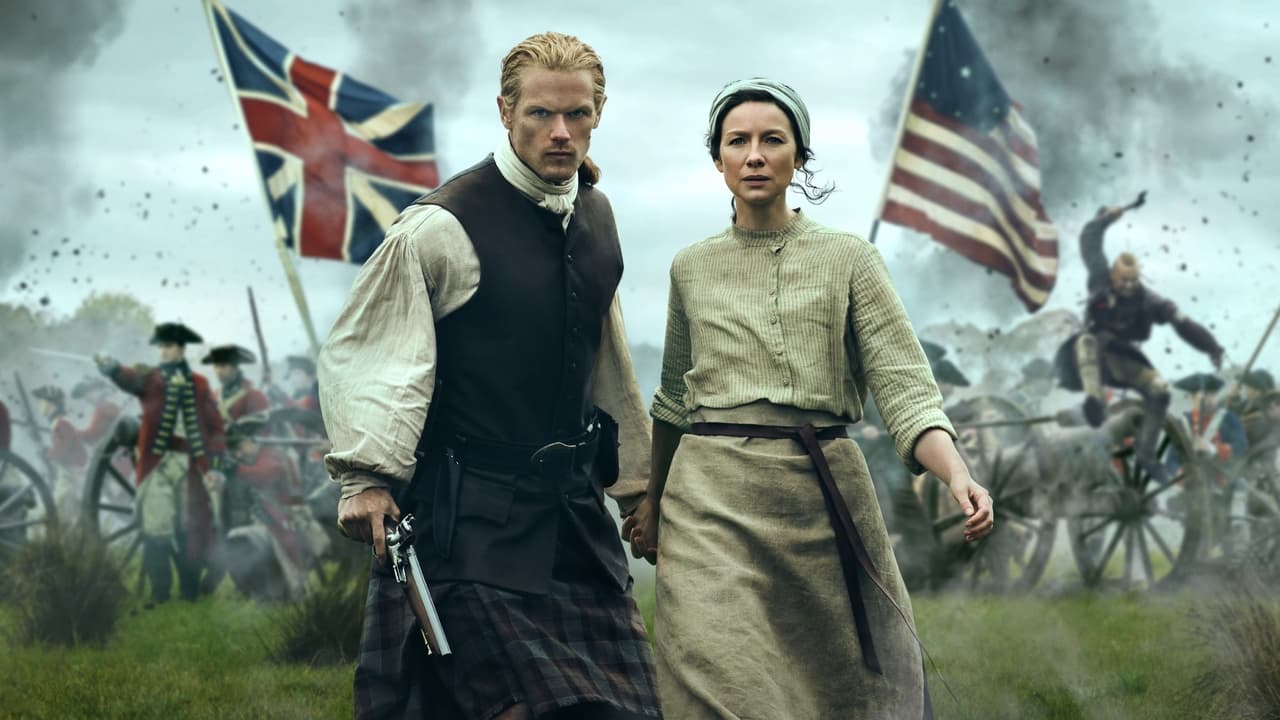
The Ending, Explained
The central question — Outlander ending explained — is not a technical puzzle. Viewers who arrive hoping for a science-fiction mystery that decodes the mechanics of Claire's journey will find something quieter and older. Her trip to 1743 is rooted in the magic of the Scottish standing stones rather than in any gadget or equation, which means there is no button to press to send her home. The finale's strength comes from accepting that premise and letting the drama play out as a human dilemma instead of a riddle, with no villain to defeat and no timeline to repair.
What Happens
The final act — what happens in the Outlander ending — forces Claire Randall to confront the impossible shape of her new life. After being swept from 1945 into eighteenth-century Scotland, she survives by learning a world where her training as a combat nurse is both an asset and a mark of suspicion. When she is compelled to marry Jamie, a chivalrous and romantic young Scottish warrior, the arrangement ignites a passionate affair that leaves her torn between two vastly different men and two irreconcilable lives. The closing stretch does not erase that division; it makes the choice unavoidable.
The series — Outlander explained in shorthand — is best understood as a historical romance that uses time travel as a doorway rather than a destination. Once the threshold is crossed, the show spends its energy on clan politics, survival, and the slow building of trust between two people who had no business meeting. The final hours are less about reversing the spell and more about asking whether a person can carry two centuries inside one heart. It is patient storytelling that trusts the audience to invest in a world before it asks them to judge it.
The Meaning Behind the Ending
Its core — Outlander ending meaning — becomes clear when you treat the ending as a test of identity. Claire is not the same woman who once tended wounded soldiers in a war she understood. The past has stripped away her certainty and replaced it with instinct, alliances, and a love that demands everything. Returning to 1945 would mean stepping back into a life that no longer fits, while remaining in 1743 means accepting exile from everything familiar. The tragedy and the hope live in that balance.
In other words, the show treats displacement as a moral condition. Claire's modern values collide with an older world, and she must decide which parts of herself are negotiable. The finale suggests that belonging is not simply a matter of geography; it is a matter of choosing the people and principles you are willing to die for. That is why the conclusion feels less like a cliffhanger and more like an acceptance of consequence.
Themes You Might Have Missed
Beneath the romance, the story is a study in cultural collision. Claire arrives with twentieth-century assumptions about medicine, autonomy, and gender, and every one of them is challenged by the realities of clan life. Her knowledge makes her valuable, yet it also makes her dangerous, because the past does not easily tolerate women who speak out of turn. That tension turns her outsider status into a lens for examining how fragile the rules of any society really are.
Scotland itself functions almost as a second character. The highlands are rendered not as scenery but as a pressure system of loyalty, occupation, and violence. Jamie's world asks him to be both gentle and brutal, and Claire must learn that chivalry and warfare are not opposites in 1743. For viewers who enjoy period stories where public duty and private desire grind against each other, Reign offers a different court but a similar tension.
The magical elements deserve attention too, because they are deliberately vague. The stones are not a laboratory; they are a threshold that obeys folklore rather than physics. That choice signals that the show cares about myth and emotional truth more than scientific consistency. If you like fantasy that treats prophecy as an emotional force rather than a set of rules, The Wheel of Time is another adaptation where destiny and loyalty pull in opposite directions.
The Verdict on Outlander
The verdict — Outlander finale explained — is that the show succeeds or fails depending on what you came for. If you want a tightly plotted science-fiction puzzle, the mystical vagueness may frustrate you. If you want a sweeping, slow-burn romance anchored by Caitríona Balfe and Sam Heughan, the final act delivers a genuinely aching conclusion about the cost of choosing one life over another.
It is not a perfect binge. The first season takes its time, favoring atmosphere and relationship-building over constant incident, and some subplots sprawl. Still, the finale's focus on an impossible choice gives the whole enterprise emotional coherence, and the supporting cast — including Sophie Skelton, Richard Rankin, John Bell, David Berry, Charles Vandervaart, and Izzy Meikle-Small — keeps the world feeling lived-in. Fans of dark fantasy retellings might also appreciate Cursed for a similar mood of destiny and rebellion.
Outlander At a Glance
Here is the quick reference for new viewers. Genre: Drama with science-fiction and fantasy elements. Rating: 8.198 out of 10, based on 3,007 votes. Tagline: What if your future was the past? Main cast: Caitríona Balfe, Sam Heughan, Sophie Skelton, Richard Rankin, John Bell, David Berry, Charles Vandervaart, and Izzy Meikle-Small. Because the listing marks the runtime as not applicable, check individual episodes on the stream page for exact lengths.