Mookuthi Amman 2 (2026): A Divine Guardian Faces New Evil
Mookuthi Amman returns to protect a prince from a mysterious woman embodying a new evil in this fantasy drama.
November 13, 2026
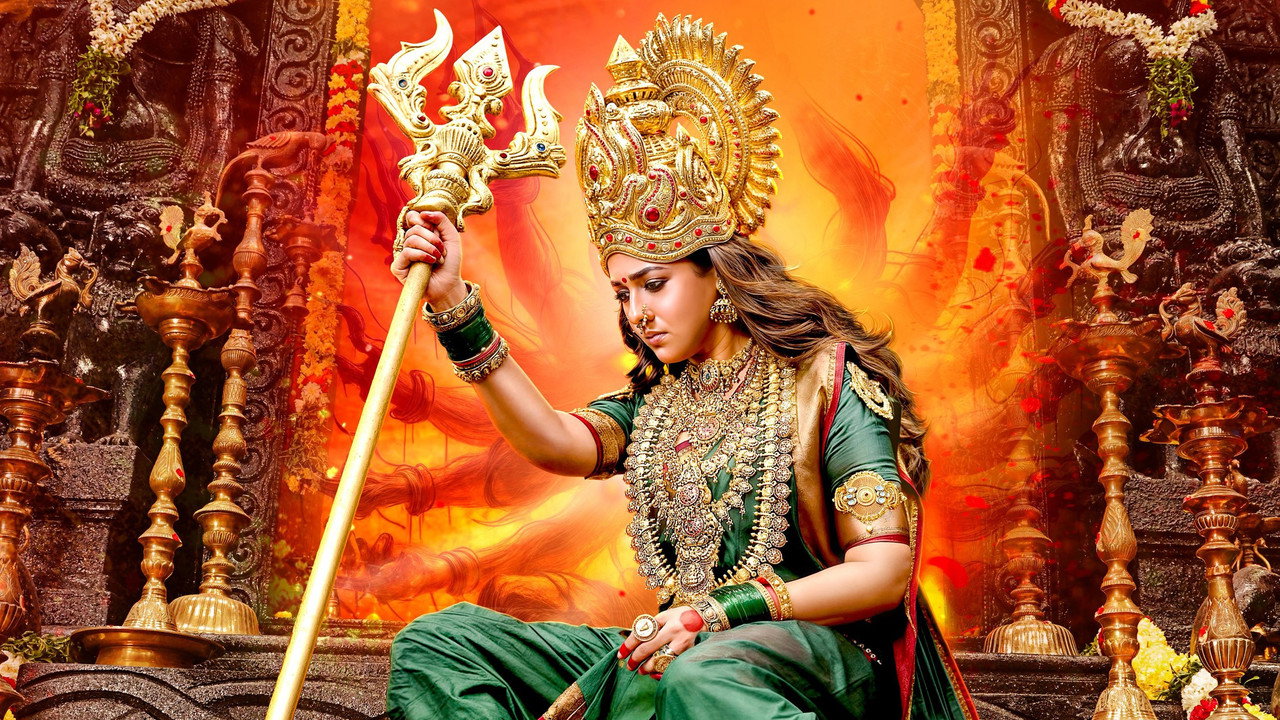
The Ending, Explained
Sequels to devotional fantasy films have a strange job to do. They have to honor a familiar figure while also pushing her into territory the first movie never touched, and this follow-up manages that by introducing a villain who feels genuinely different from anything the earlier installment offered. The finale is the reason people will be searching for Mookuthi Amman 2 ending explained write-ups afterward, so let's walk through it carefully.
What the closing act does is refuse to treat the confrontation as a simple good-versus-evil slugfest. There are two protective figures here — one of them divine, the other a mortal queen — and the movie builds its emotional case around the idea that sacrifice is a form of strength rather than defeat. The mysterious woman who emerges as the new threat exists in direct opposition to that idea, so the resolution is less about who wins a fight and more about which worldview gets to persist.
If you enjoy films that carry that kind of mythic weight without losing their warmth, The Good Witch's Destiny is a fine companion piece — it handles destiny and guardianship in a much gentler register but grapples with similar questions.
What Happens
To understand the close, you need the setup the film gives you. A queen gives her life to shield her son, the prince, from invaders. That death is the emotional bedrock of the entire story, and it's established early enough that it colors everything afterward without being a cheap twist. Mookuthi Amman steps in to watch over the child, and the plot's engine is her attempt to keep that promise while a dangerous new female presence rises to challenge her.
The one thing you should know if you're asking Mookuthi Amman 2 explained in plain terms: the film never lets the divine protector simply destroy the antagonist and walk away. The confrontation forces a reckoning with what protection actually costs. The queen's sacrifice echoes forward — it isn't wasted, and the story wants you to feel that inheritance rather than have it stated outright.
The supporting cast keeps this from becoming airless. Urvashi and Yogi Babu supply the comedy that balances out the heavier material, while Regena Cassandrra and Duniya Vijay lend the antagonist side real menace. Nayanthara anchors it all, and the finale leans hard on her presence rather than on spectacle alone.
The Meaning Behind the Ending
So what happens at the end of Mookuthi Amman 2 on a thematic level? Once you strip away the specifics, the film is arguing that the new evil it introduces is a perversion of protection itself. The antagonist isn't just dangerous — she's a mirror of the maternal instinct that drives the hero. That's why the climax lands as more than a battle: it's a statement about what happens when guardianship curdles into something possessive and destructive.
This is precisely where Mookuthi Amman 2 ending meaning becomes interesting to unpack. The resolution refuses to erase the loss at the heart of the story. The prince survives — that much the premise makes clear — but survival carries an obligation. The child who is protected must eventually become someone who protects. Framed that way, the closing moments aren't about divine power so much as about continuation: the queen's choice, Amman's vow, and the boy's future all link into one chain.
There's also a quieter read here about grief. The film doesn't pretend a sacrifice can be undone or made painless. Instead it suggests that the people who receive the gift of protection are the ones who decide what it's worth. That's a mature note for a fantasy comedy-drama to strike, and it's why the ending lingers.
Themes You Might Have Missed
Let's pull out the threads a casual viewer might overlook. If you're rewatching Mookuthi Amman 2 to catch details, pay attention to these:
- Inherited duty. The prince doesn't choose his role; it's pressed on him by a mother's last act. The film treats that burden with real ambivalence rather than pure reverence.
- Duality of femininity. The protector and the antagonist share a kind of mirrored power. The story complicates the idea that divine protection is automatically noble.
- The cost of victory. Nobody wins cleanly. The resolution measures triumph by what it required, not by what it defeated.
- Faith as action. Amman does not arrive to settle debates; she arrives to act. For a devotional film, that's a pointed choice.
If you like ensemble comedy woven through a larger fantasy narrative, Shorts scratches a similar itch, though it handles its themes with far more chaos than melancholy.
The whole movie is 144 minutes long, and it uses that runtime to let the mythology breathe. Sundar C keeps the comedy and the drama in the same frame, and that's why the closing act works. If you only skim it, you'll miss the bits of foreshadowing sprinkled into the lighter scenes.
Mookuthi Amman 2: Our Final Verdict
When people discuss the Mookuthi Amman 2 climax, the conversation tends to center on whether it delivers the emotional payoff the setup deserves. It's easy to see why. The film builds toward a confrontation between an established protector and a slicker, more dangerous evil, and it gets there without turning into a pure effects showcase. The result is something that feels closer to a parable than a superhero finale, which may frustrate viewers who wanted pure action — but it's a strong argument for the film's ambitions.
This isn't a perfect movie, and a rating that sits at 0/10 with zero votes means there's no real consensus to lean on yet. What we can say is that the film knows what it wants to say about sacrifice and duty, and it manages to say it in the last act without spelling it out.
For a family-friendly story of duty passed down with gentle comedy to soften it, Candy Cane Lane is a decent chaser if you want a lighter take on a similar moral bent.
Mookuthi Amman 2 Highlights
- Nayanthara gives the role a gravity that keeps the fantasy grounded and gets the film's central theme across.
- Regena Cassandrra and Duniya Vijay make the antagonist a credible, unsettling presence rather than a cartoon.
- Urvashi and Yogi Babu keep things from sagging, especially in the middle stretch.
- The queen's sacrifice at the start gives the story a real emotional anchor rather than a throwaway flashback.
- Sundar C balances devotion and comedy without letting either one undercut the other.
- The final act trusts the audience to sit with an ambiguous resolution instead of handing over easy answers.
In the end, this is a film that rewards patience. The setup asks you to care about a mother's choice and a promise made to a child, and the payoff asks you to sit with what that choice means long after the credits roll. Whether or not you agree with the ending's approach, it's clear that the film's heart is in the right place.