Law & Order: Criminal Intent (2001): Inside the Criminal Mind
A spoiler-aware look at the Law & Order: Criminal Intent finale, its key reveals, hidden themes, and why the final scenes feel like a confession.
October 19, 2026
The Ending, Explained
Police procedurals usually promise a neat bow: the detective names the suspect, the suspect is led away, and the city exhales. Law & Order: Criminal Intent spends years teaching its audience to expect something different. The third entry in the Law & Order franchise takes viewers deep into the minds of its criminals while following the intense psychological approaches the Major Case Squad uses to solve its crimes. The result is a show where the closing scenes function less like a verdict and more like a confession. By the time an arc resolves, the audience has already been walked through the perpetrator's damaged logic, so the final act feels less like justice served and more like a troubled mirror held up to human behavior.
For anyone who enjoys urban-set crime storytelling that treats the city as a living, breathing antagonist, this series feels like a close sibling to Big Apple. Both works understand that New York City is not merely scenery but a system of pressures and contradictions. Where common procedurals would rush to the handcuffs, Criminal Intent asks the audience to sit with the discomfort of knowing exactly how a person ends up capable of murder.
What Happens
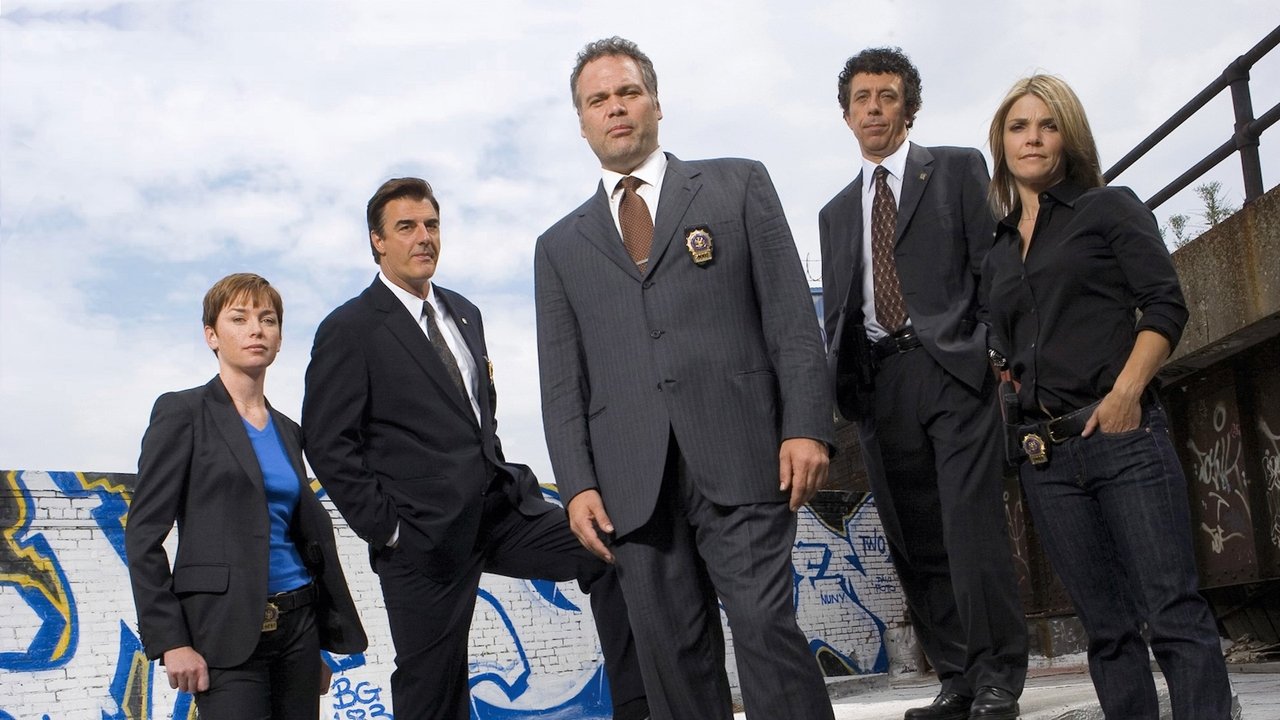
Throughout its run, the series follows the Major Case Squad as they tackle the most disturbing murder investigations New York City has to offer. Vincent D'Onofrio and Kathryn Erbe anchor much of that tension, creating a partnership defined by instinct and friction rather than by clean authority. Their characters do not simply process crime scenes; they dissect the psychology behind them. As the ensemble evolves, Julia Ormond and Jay O. Sanders step into the unit, adding new textures to the team's internal life, but the core mission never changes. To solve the case, the squad must first understand the person responsible.
Structurally, typical episodes and longer arcs move from discovery into a slow, deliberate excavation. The opening act establishes the crime and the rules of the hunt. The back half then spends its time inside the suspect's perspective, reconstructing the path from wounded ego to violent act. That structure means the squad often identifies the offender well before the final stretch. The suspense does not come from asking who did it. It comes from watching whether the detectives can prove it while also resisting the pull into the same darkness they are chasing. Compared to the straight procedural logic of Dragnet, this approach feels closer to a psychological duel than a paperwork exercise.
When viewers jump straight to the Law & Order: Criminal Intent ending, they often feel that something important was lost. That reaction is intentional. The middle acts are engineered to make the killer's worldview feel suffocatingly real, so the resolution carries emotional weight. Without that groundwork, the arrest would feel mechanical. With it, the arrest feels like the only possible exit from a dangerous mental maze.
The Meaning Behind the Ending
Grasping the Law & Order: Criminal Intent ending meaning requires accepting that closure here is intellectual rather than celebratory. The show rarely lets the audience feel triumphant in a simple way. Instead, the final scenes act as an autopsy of motive. The Major Case Squad wins, but the victory is stained by everything they had to understand in order to get there. The message seems to be that evil is not an external monster; it is a human failure, shaped by family, by city pressure, by wounded pride, and by the kinds of quiet desperation that rarely make headlines.
This is why reading the Law & Order: Criminal Intent ending explained as a twist hides the real point. There is no single reversal that rewrites the story. The last act clarifies the pattern, connecting the behavioral dots the squad has been collecting. It is closer to reading a diary than to pulling a rabbit from a hat. The audience is invited to recognize the criminal's humanity without ever excusing their crime.
For viewers who want Law & Order: Criminal Intent explained without spoiling the first act, the safest summary is this: the show's climax is about diagnosis, not punishment. The killer may be caught, but the show's true interest lies in the question of how someone builds a world in which murder feels justified.
Themes You Might Have Missed
New York City operates as a constant thematic engine in this series. Every borough, every social class, every cramped apartment and glass office tower feeds a different version of American ambition. The NYPD detectives navigate those worlds not as outsiders but as participants who have seen how easily respectability curdles into violence. The murder investigation is never just about the body; it is about the ecosystem that produced the killer. In that sense, the show sits comfortably beside character-driven detective fiction like The Inspector Lynley Mysteries, which also treats class, psychology, and personal damage as essential clues.
Another overlooked theme is the emotional toll of empathy. Detectives in this universe must use their own imaginations to reconstruct terrible acts. The show quietly suggests that this kind of thinking leaves marks. The squad solves the case, but the audience is left to wonder how much of themselves they spent to do it.
Law & Order: Criminal Intent: The Bottom Line
With a 7.599/10 rating earned from 390 votes, the series clearly found the audience willing to meet it on its own terms. It never tried to be the fastest or the loudest crime show. Instead, it committed to the slow unraveling of human motive, trusting strong performances from its principal cast and a consistent focus on psychological realism. For viewers who prefer their mysteries to linger in the mind long after the screen goes dark, it remains one of the most distinctive expansions of the franchise.
Law & Order: Criminal Intent Highlights
When fans gather to list the Criminal Intent best episodes, they rarely point to the most explosive moments. They point to the quiet confrontations, the long interrogations where a detective slowly dismantles a suspect's self-image. Those scenes are the show's signature. They prove that the most terrifying force in a murder investigation is not the weapon; it is the story behind it.