Godzilla Minus One (2023): Duty and Forgiveness in Ruins
A breakdown of Godzilla Minus One's final act, exploring its themes of duty, forgiveness, and survival in postwar Japan.
November 12, 2026
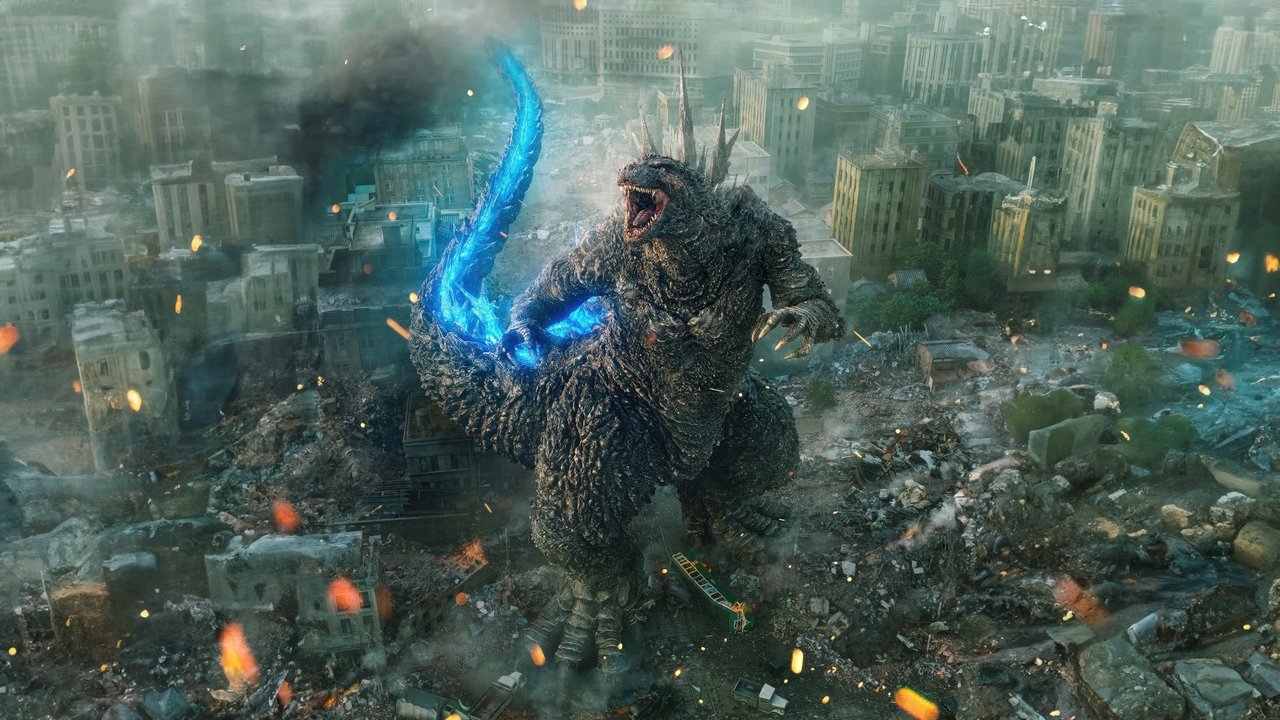
The Ending, Explained
Takashi Yamazaki's 2023 kaiju film builds its final act not around spectacle alone but around a question of duty and forgiveness, and the Godzilla Minus One ending, explained plainly, is less about defeating a monster than about whether a broken man can finally choose to live. If you've finished the movie and want to understand what that closing stretch is really doing, this breakdown walks through the last act without ruining the first. The film begins in the final days of the war and follows a failed kamikaze pilot named Koichi, who carries shame into a ruined Tokyo and finds an unlikely household forming around him. By the time Godzilla returns to Japanese waters, Koichi has something to lose, and that changes everything about how the climax plays out.
What Happens
In the final act, a civilian fleet of small boats sets out to stop the creature using a plan built on physics rather than firepower, since the government and foreign militaries have left the survivors to fend for themselves. The scheme relies on dropping canisters that force the monster to sink through a rapid change in buoyancy. It is desperate, makeshift, and entirely the work of ordinary citizens rather than soldiers.
Koichi, who has spent the film running from his own survival, takes on the most dangerous role. He flies a plane into the creature's mouth to deliver a lethal charge. Earlier the audience learns the plane has no ejection seat — a detail that lets the film play on the viewer's assumption that this is a suicide mission, a final atonement for his earlier cowardice. The explosion works, and the monster falls apart, its head blown open before the corpse sinks.
Then the twist lands. Koichi's plane does have an escape mechanism after all, and he survives, ejecting before impact. He parachutes back to his family and the woman who has been raising an orphaned child with him. Fans of this kind of practical monster storytelling should also look at Rodan, a 1956 classic that handles similarly grim stakes with older effects work.
The final scene, though, is the stinger. As the wreckage settles, a small detail reveals something impossible — a glimpse suggesting the creature's regenerative nature has not been fully defeated. The threat is not gone. If you were wondering what happens at the end of Godzilla Minus One regarding the monster itself, that brief shot is the answer: the death was real, but the survival is ambiguous.
The Meaning Behind the Ending
The clearest reading of the Godzilla Minus One ending meaning is that it refuses to treat self-destruction as heroism. Koichi believes throughout the story that his life must be traded away to be redeemed. The film rejects that idea. Having him live is the point — the movie argues that choosing to survive, and to care for the people who depend on you, is braver than dying well. The absence of an ejection seat in the earlier scenes was a deliberate misdirection, and the reveal reframes his final act as one of hope rather than penance.
The Godzilla Minus One final scene then complicates that hope. Rebirth after devastation carries a cost, and the lingering shot suggests that people who wish for a clean ending rarely get one. The creature's regeneration mirrors the film's larger concern with what Japan carries forward from the war: guilt, trauma, and the knowledge that certain wounds never fully close.
Themes You Might Have Missed
The movie is also an argument about collective action. The survivors succeed because they organize, plan, and trust each other when institutions have failed them. The young cast — Ryunosuke Kamiki as Koichi, Minami Hamabe, Yuki Yamada, Munetaka Aoki, Hidetaka Yoshioka, Sakura Ando, Kuranosuke Sasaki, and young Sae Nagatani — all carry that shared burden of community across the film.
- Survivor's guilt: Koichi's shame is the emotional engine of the story, and his arc resolves it not by erasing it but by giving him a reason to keep going.
- Kamikaze and duty: The film's critique of wartime self-sacrifice is central, and it is most visible in how the climax subverts the audience's expectations.
- Nuclear horror: The creature is a walking reminder of atomic testing, and the military failure that follows echoes the helplessness many felt after the war.
- Domestic tenderness: The makeshift family at the center is not a subplot; it is the reason the ending means anything.
Readers who enjoy bold, satirical takes on militarism might also appreciate Team America: World Police, which tackles similar themes with a very different tone.
What We Think of Godzilla Minus One
This is one of the strongest entries the franchise has produced in decades. The film runs 125 minutes and never feels padded, balancing large-scale mayhem with a genuinely moving story about found family. Yamazaki's direction keeps the camera grounded, and the creature effects are used sparingly so that each appearance lands with weight. The result, with a rating around 7.6/10 across thousands of votes, is a rare reboot that justifies its existence and then some.
For a different corner of the creature-feature universe, fans can explore Godzilla: Planet of the Monsters, an animated take on the same mythology that veers into post-apocalyptic territory.
Godzilla Minus One Fast Facts
- Director: Takashi Yamazaki
- Genre: Science Fiction, Horror, Action
- Runtime: 125 minutes
- Cast: Ryunosuke Kamiki, Minami Hamabe, Yuki Yamada, Munetaka Aoki, Hidetaka Yoshioka, Sakura Ando, Kuranosuke Sasaki, Sae Nagatani
- Tagline: 戦後、日本。無(ゼロ)から負(マイナス)へ。
If you came here looking for the Godzilla Minus One explained in a way that connects the plot to its themes, the short version is this: the ending wants you to see survival as a victory and regeneration as a warning. It is a monster movie that earns its emotional payoff, and that is exactly why the final moments stay with you.