Firefly Wedding (2026): A Noblewoman's Deal With Her Captor
A dying noblewoman proposes marriage to her assassin, igniting an obsession that forces her to choose between family duty and consuming love.
October 16, 2026
The Ending, Explained
Many viewers search for Firefly Wedding ending explained after the final episode finishes, and rightly so. The conclusion of this anime does not rely on shock twists. Instead, it asks a quiet question about what a person owes to family and what they owe to their own heart. Satoko Kirigaya, a noblewoman in the Meiji era, has always known her time is short. The last sequences show her facing a decision that has been building since her unusual marriage pact began. The narrative refuses to hand the audience a neat resolution, which is precisely why discussions about it flourish online.
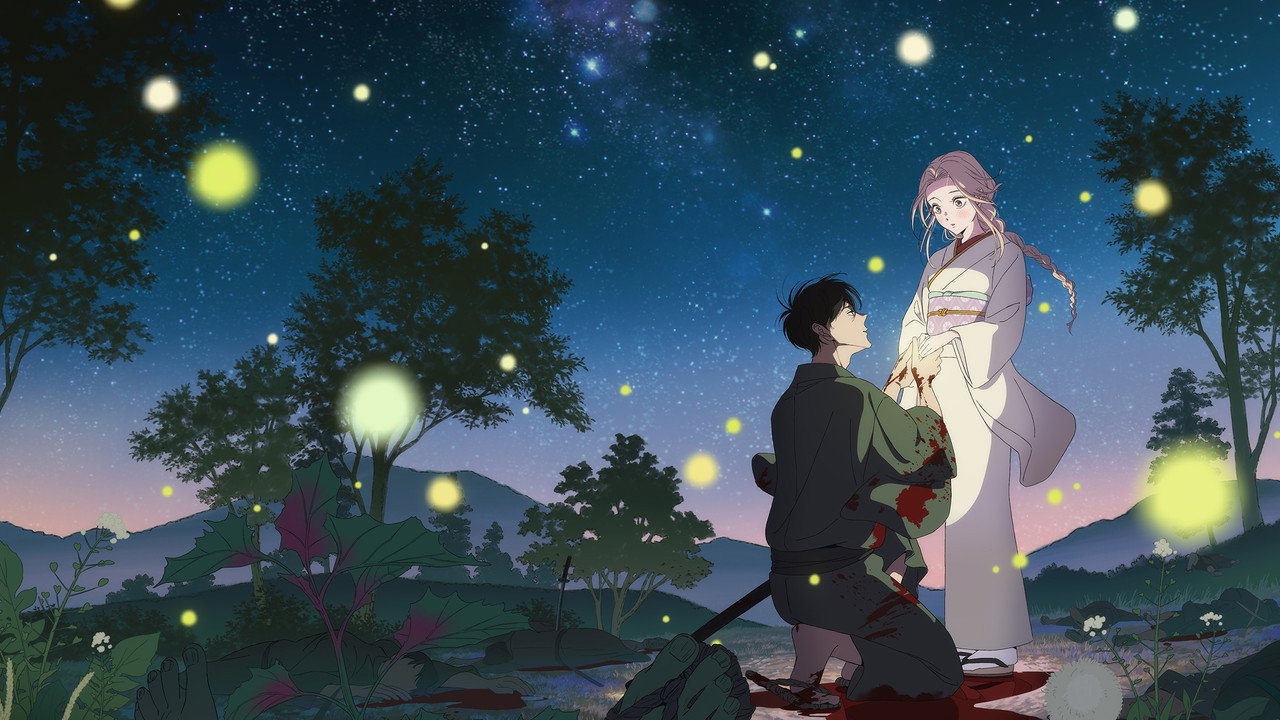
The production values support this restraint. As an animation adapted from a manga, the series uses soft backgrounds and careful lighting to suggest the glow of fireflies, a motif that mirrors the brevity of human connection. Lynn lends her voice to Satoko, conveying both refinement and quiet panic. Opposite her, Koki Uchiyama portrays the husband whose attachment grows beyond reason. Their recorded performances were praised by the small but passionate pool of six voters who awarded the title a flawless 10.0 on our site.
Without revealing how the first act places these characters together, we can say that the closing movement is about consequence. Every earlier choice radiates into the final minutes. The drama genre tag is apt because the tension is internal rather than external. A story that begins with a transactional bond earns its emotional weight only if the ending feels inevitable, and here it does.
What Happens
To understand what happens at the end of Firefly Wedding, we must look at the final confrontation between duty and desire. Satoko has been bound by a fake relationship that turned into something far more dangerous. The man she calls husband descends into obsession, and the social fabric of the Meiji period offers her no easy exit. In the last act, she stands at a crossroads: uphold her father's expectations or surrender to a love that threatens to erase her sense of self.
The animation avoids grand battles. The drama plays out in glances and restrained dialogue. Kent Ito and Kenjiro Tsuda support the cast with secondary roles that frame the social pressure of the period. Kazuhiro Yamaji and Haruhi Nanao also appear, giving the household a sense of inherited obligation. Hika Tsukishiro rounds out the ensemble. The camera often rests on small objects—a folded letter, a dim lantern—to mark the passage of a life measured in moments.
We should note that the finale does not spell out a single correct answer. Rather, it presents a woman with limited time weighing two incompatible futures. That ambiguity is the point. The final act makes clear that no choice can fully escape the inheritance of family duty.
The Meaning Behind the Ending
The Firefly Wedding ending meaning centers on the cost of intimacy under a rigid class system. A woman with little time left chooses how to spend her remaining days. The title itself evokes fleeting light, much like the insects that give the story its name. When Satoko finally makes her choice, the screen lingers on small gestures rather than pronouncements.
This is a romance, but not a comfortable one. The fake relationship trope is used to expose how performative bonds can become real, and then suffocating. The Meiji setting reinforces the idea that personal happiness was often secondary to family honor. By setting the story in a historical frame, the anime invites comparisons to other period dramas while maintaining its own melancholic tone.
Obsession is another key element. The husband's fixation is not romanticized; it is shown as a force that could consume them both. Thus the ending meaning also warns about the danger of merging identities completely. Fireflies appear at pivotal moments, and their light is never guaranteed to return. This natural imagery ties directly to the ending's meditation on mortality.
Themes You Might Have Missed
A full Firefly Wedding explained reveals the Meiji period constraints woven into every scene. The anime never lectures about history, yet the clothing, the etiquette, and the expectations placed on a noblewoman shape each decision. Romance here is not free from surveillance.
Another subtle thread is the concept of a borrowed identity. Because the marriage began as a transaction, both partners wear masks. The theme of based on manga adaptation also means the visual language carries symbolic repeats of fireflies as transient beauty. The rating of 10.0 from six votes suggests that these layered ideas resonated with early viewers.
Attention to seasonal change marks the passage of Satoko's remaining time. The fake relationship starts as a shield and becomes a cage. Even minor characters reflect the era's attitudes toward duty. Fans of character-driven animation might also enjoy The Fruit of Grisaia, which similarly probes damaged people forming unlikely ties.
Is Firefly Wedding Worth Your Time?
The Firefly Wedding end scene leaves a quiet impression that lingers after the credits. With a perfect 10.0 rating from six votes on our streaming platform, it is clear that early viewers found something special. The series is short on action but long on emotional precision.
If you prefer historical settings with psychological depth, this drama delivers. Those who enjoyed Anne Shirley will recognize a similar attention to a young woman's inner life, though the tones differ. The anime balances its romance with a sober look at mortality. For anyone curious about a story where the ending is a question rather than an answer, this 2026 release merits a spot on your list.
We should also mention that the voice cast's cohesion elevates the material. Lynn and Koki Uchiyama create a believable dynamic, while the supporting actors ground the world. The fact that it is based on manga may reassure viewers who like adapted narratives with established source material.
Firefly Wedding At a Glance
Here is a quick summary for the curious browser:
- Genre: Animation, Drama
- Year: 2026
- Source: Based on manga
- Setting: Meiji period
- Central hook: A noblewoman's fake relationship with a dangerous figure
- Voice cast includes Lynn, Koki Uchiyama, Kent Ito, Kenjiro Tsuda, Kazuhiro Yamaji, Haruhi Nanao, Hika Tsukishiro
- Current rating: 10.0/10 from six votes
For a different flavor of anime romance, consider Amazing Sarutobi, a classic from 1982 that plays with period adventure. While tonally distinct, it shares a willingness to place personal bonds at the center of historical turmoil.
Overall, the show respects its audience's intelligence. It does not explain every motif outright, allowing the final act to speak through imagery and performance. That restraint is rare in modern streaming animation, and it is the reason the phrase Firefly Wedding explained keeps appearing in viewer discussions without anyone needing to reduce it to a simple plot point.