CSI: Crime Scene Investigation (2000): Why Evidence Wins Cases
A Las Vegas forensic team solves criminal cases by scouring crime scenes and collecting irrefutable evidence to find missing pieces.
October 18, 2026
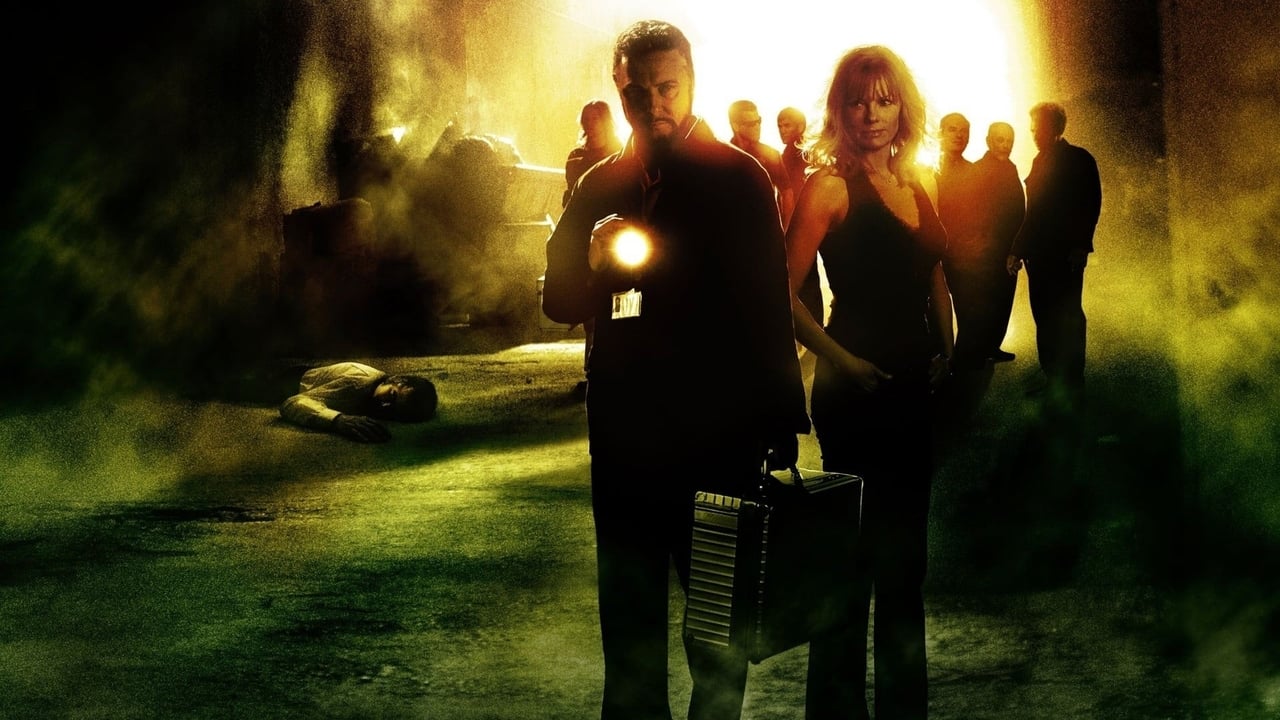
The Ending, Explained
Many long-running shows leave audiences with lingering questions, but a straightforward CSI: Crime Scene Investigation explained approach shows the series always trusted physical proof over dramatic revelation. The Las Vegas team of forensic investigators, including Ted Danson, George Eads, Jorja Fox, Eric Szmanda, Robert David Hall, Wallace Langham, Jon Wellner, and Elisabeth Harnois, built each hour around scouring the crime scene and collecting irrefutable evidence. This breakdown serves as a CSI: Crime Scene Investigation ending explained guide for viewers who want closure without rewatching every season. The final act does not discard the police procedural formula; instead, it reinforces the steady rhythm of criminal investigation. Fans of behavioral profiling might also appreciate Criminal Minds, which explores the minds behind the crimes rather than the traces left behind. The appeal rests in the program's commitment to forensic detail, where a homicide detective rarely solves a case through intuition alone, and the forensic expert must surface the missing pieces.
The format quickly establishes that each case begins with a crime scene and ends with forensic evidence speaking for the victim. That loop is the engine of the police procedural, and the closing installments simply trust it one final time. The ensemble of forensic experts and homicide detectives never needed a larger arc to feel complete; their daily criminal investigation is the story.
What Happens
As the broadcast run closes, many people ask what happens at the end of CSI: Crime Scene Investigation. The answer is consistent with the premise: the Las Vegas investigators continue to process murder investigations by examining forensic evidence and piecing together truth. There is no abrupt departure from the established pattern of detective work. The team approaches each crime scene with the same trained eye, ensuring evidence remains the sole narrator. Without spoiling the early chapters, it is fair to say the later sequences emphasize collaborative criminal investigation. Forensic experts, technicians, and supervising detectives share the burden of proof. Whether the case involves a complicated homicide or routine theft, the procedure stays fixed: document, collect, analyze, conclude. That predictability is the backbone of a police procedural that earned a 7.606/10 rating across 1440 votes.
The rating of 7.606/10 from 1440 votes reflects how many viewers valued that reliability. Rather than twisting the formula, the final episodes present murder investigation as a craft. The Las Vegas backdrop remains consistent, with the team moving through the city's spaces to collect what others missed. This is what makes the conclusion satisfying for fans of detective realism.
The Meaning Behind the Ending
The CSI: Crime Scene Investigation ending meaning becomes clear when we view the last stories as a meditation on permanence. Forensic science does not fade when a single case closes; the missing pieces from one crime scene become part of a larger archive of truth. By keeping focus on irrefutable evidence, the show suggests justice is continuous rather than isolated. The investigators represent an institution that outlasts any individual storyline. Their work as forensic experts and homicide detectives affirms careful observation can withstand flawed testimony. In this light, the conclusion honors a method. The crime investigation depicted finds purest expression in final acts where the camera lingers on small details—a fingerprint, a fiber, a measurement—proving the police procedural can satisfy without sentimentality.
Another layer of the ending is the suggestion that forensic science is a quiet form of public service. The missing pieces gathered by the investigators contribute to a cumulative truth that outlives the broadcast. By framing the last act around the method rather than the individual, the show honors the forensic expert's role in society.
Themes You Might Have Missed
Beyond obvious detective work, the program quietly explores patience required in criminal investigation. A forensic expert often spends hours with a single piece of forensic evidence, mirroring the show's unhurried pacing. The theme of Las Vegas as backdrop also deserves attention: the city's brightness contrasts with dark corners where murder investigation begins. Viewers who enjoy reflective cold-case storytelling should consider Unforgotten, a series that likewise treats evidence as a bridge between past and present. While CSI focuses on immediate forensic puzzle, both share respect for meticulous police work. Another subtle thread is mentorship among cast; seasoned investigators guide newer members, ensuring forensic standard remains high as faces change.
The police procedural label fits, but the series also nudges attention to the microscopic. A single fiber or data point from forensic evidence can redirect an entire homicide detective's theory. That focus on scale—from Las Vegas streets to a microscope slide—is a theme worth revisiting.
Our Take on CSI: Crime Scene Investigation
Our perspective is the series earned its place through consistency. When we consider the CSI: Crime Scene Investigation last scene, we see the same meticulous documentation that defined the run. The image of a technician recording a Las Vegas crime scene encapsulates the show's belief that every detail matters. It is a quiet moment yet speaks louder than any manufactured twist. The ensemble featuring Ted Danson and colleagues delivered performances grounded in professional restraint. We also note the program never pretended to be anything other than a police procedural. Its strength lies in showing how forensic evidence solves the mystery. For audiences seeking complementary angle on homicide detective work, Bosch presents a driven investigator in Los Angeles.
CSI: Crime Scene Investigation in Short
To summarize, the show follows a Las Vegas team of forensic investigators trained to solve criminal cases by scouring the crime scene, collecting irrefutable evidence, and finding missing pieces that solve the mystery. Themes of detective rigor, police procedure, and forensic expertise run through all episodes. With a rating of 7.606/10 from 1440 votes, it remains a reference point for genre. The main cast—Ted Danson, George Eads, Jorja Fox, Eric Szmanda, Robert David Hall, Wallace Langham, Jon Wellner, Elisabeth Harnois—embodied forensic expert and homicide detective with credibility. The CSI: Crime Scene Investigation explained mindset applied throughout this article should help newcomers appreciate why the ending feels both conclusive and open-ended. Whether you revisit early murder investigation arcs or sample final acts, the core promise holds: forensic evidence will reveal truth.