Buddy (2026): A Magical Unicorn's Surreal Hostage Horror
Buddy (2026) stars a magical singing unicorn who imprisons his cast in a surreal TV dimension while becoming increasingly demented.
October 20, 2026
The Ending, Explained
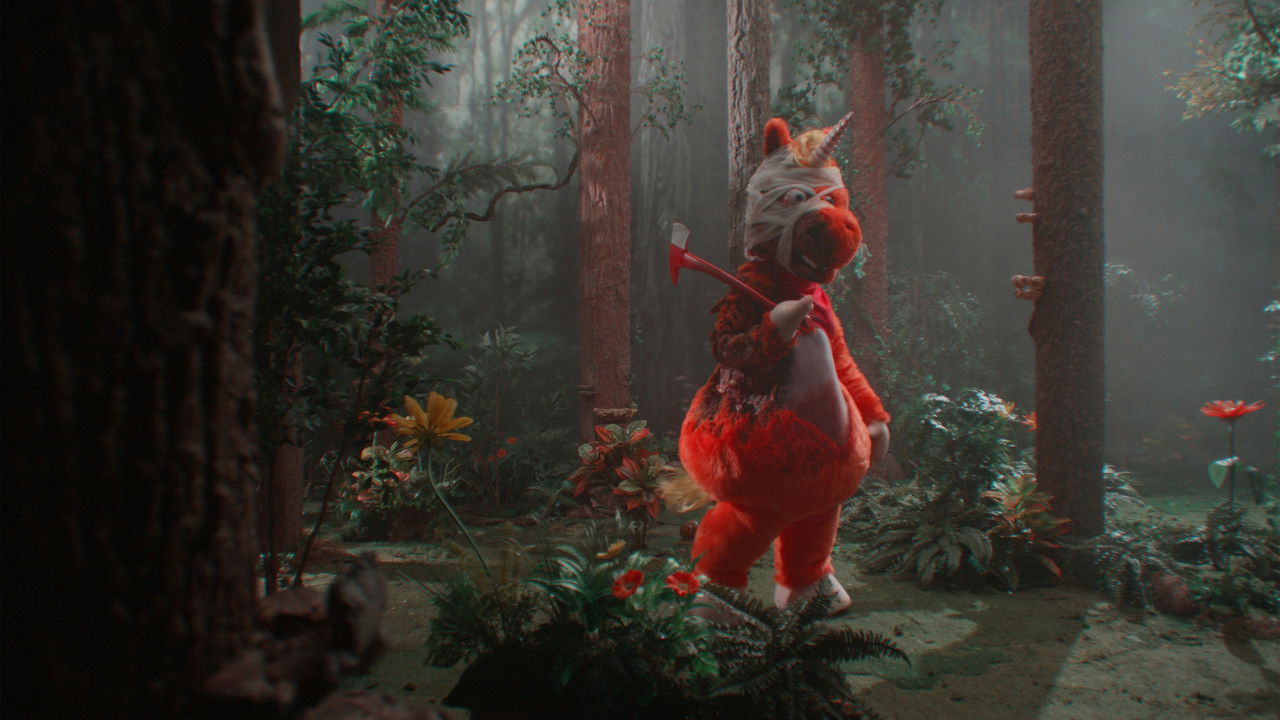
Buddy is a 2026 independent genre blend from director Casper Kelly, running a tight 96 minutes and currently sitting at a 7.128 out of 10 across 148 viewer votes. Its tagline, "It's Buddy!", hints at the cheerful menace of a magical singing orange unicorn who pulls a cast into a surreal television-show dimension. Without revealing the early setup, we can say the back half of the movie slides from whimsical variety hour into something far uglier. Our Buddy ending explained thoughts focus on the unicorn's turn from playful host to relentless captor.
The ensemble includes Keegan-Michael Key, Cristin Milioti, Delaney Quinn, Caleb Williams, Madison Skyy Polan, Tristan Borders, Patton Oswalt, and Jimmica Collins, each trapped inside a broadcast realm that warps suburban normality into a stage for madness. The film works as a dark comedy and supernatural horror piece, using practical creature work to keep the unimaginable close to the viewer.
The official genres list horror, comedy, and fantasy, showing the filmmakers aimed for a unique tone. The brief runtime keeps the pace brisk, and the modest rating indicates early audiences found the mix effective rather than scattered.
Fans of surreal indie frights should also browse Dave Made a Maze, a separate feature that also drops ordinary people into a handmade fantasy space with lethal consequences.
What Happens
As the runtime progresses, the orange unicorn's personality fractures. He began as a musical emcee, but his grip on the cast tightens into a hostile lockdown. Any viewer can understand what happens at the end of Buddy once the tv host motif appears as a weapon rather than a greeting. The cheerful songs become aggressive commands, and the fabricated suburb inside the show dimension begins to bleed, literally, as slasher-style violence enters the frame.
By reading this Buddy ending spoiler, fans will see how the dimension traps the cast with no off-switch. The unicorn's demented state means the usual rules of escape simply do not apply, leaving the performers at the mercy of a being who treats gore as burlesque entertainment. We watch the line between fantasy and supernatural horror dissolve completely.
The suburban backdrop inside the broadcast starts as a bland neighborhood, but the unicorn's aggressive direction turns it into a stage for slasher sequences. This contrast defines the final act and underscores the madness at the core of the story.
Those who appreciate transgressive cinema should seek out Multiple Maniacs, which shares a burlesque and shock-driven spirit with this unicorn's brand of chaotic performance.
The Meaning Behind the Ending
The closing movement is not just about shock; it is a comment on media consumption and suburban isolation. Our Buddy ending meaning analysis appears later in the themes section, but the short version is that the unicorn represents a perverted television host who demands attention while destroying the private self. The magical creature's madness mirrors the way a friendly facade can hide predatory intent.
Because Buddy is an independent film, it enjoys freedom to mash supernatural comedy with genuine dread. The final act refuses to reset the situation with a tidy moral, instead leaving the audience inside the same unsettling broadcast. That choice elevates the picture beyond a simple cult curiosity.
Themes You Might Have Missed
Before listing specifics, it helps to note that the independent film approach allows such risks. Big studios might soften the gore, but here the burlesque and madness remain front and center, giving the project a raw edge.
Several layered ideas run beneath the surface brutality. The most obvious is the clash of cute imagery with brutal acts, a signature of dark comedy. Yet the script also toys with:
- Supernatural invasion of a mundane suburban setting
- Madness reflected through a musical tv host persona
- Slasher mechanics wrapped in burlesque presentation
- Independent film resourcefulness with practical effects
- Aggressive control masked as family-friendly fantasy
Each element reinforces the other. The unicorn is not merely a monster; he is a symbol of how entertainment can turn aggressive when the audience is held captive. The use of a singing orange creature makes the horror feel like a perverted children's program, which amplifies the discomfort.
For a meta horror comparison, watch Wes Craven's New Nightmare, where a fictional entity breaches reality much like Buddy's unicorn commands his own warped show.
The rating of 7.128 suggests viewers appreciate this odd balance. With only 148 votes so far, the movie is still finding its crowd, but the themes of madness and supernatural horror give it lasting discussion value.
What We Think of Buddy
Casper Kelly's project stands as a fresh independent film that refuses to play by genre rules. The combination of fantasy, comedy, and horror could easily collapse into nonsense, yet the committed cast and a clearly defined unicorn menace keep it grounded. Keegan-Michael Key and Cristin Milioti bring recognizable energy to the trapped ensemble, while Patton Oswalt and the younger players fill the bizarre broadcast with texture.
The presence of performers like Delaney Quinn, Caleb Williams, Madison Skyy Polan, Tristan Borders, and Jimmica Collins ensures the ensemble feels full even when the unicorn dominates the screen. Their reactions ground the fantasy and make the surreal stakes readable.
We admire how the picture uses its 96 minute runtime. There is no wasted exposition; the surreal TV-show dimension is established quickly, and the descent into demented behavior feels earned. The tagline "It's Buddy!" becomes ironic as the character stops being a welcome guest.
Though the gore is present, it serves the dark comedy rather than mere shock. As an independent film, Buddy demonstrates that practical effects and a singular vision can outperform bigger budgets when the concept is this strange.
Buddy Explained
To sum up, Buddy explained means recognizing the film as a hybrid of supernatural horror and burlesque comedy where a cute unicorn becomes a demented tv host. The narrative traps its cast in a show dimension, and the final act shows the full extent of that captivity without offering a clean rescue. Themes of suburban emptiness, madness, and aggressive control weave through every scene.
The movie's strength lies in its willingness to stay weird. With a modest vote count but a solid rating, it deserves attention from viewers who like their fantasy laced with slasher intensity. Whether you came for the unicorn or the practical creature work, the ending leaves a marked impression of a broadcast you cannot change the channel on.