Backrooms (2026): A Doorway to Liminal Fear
Backrooms (2026) turns a furniture showroom doorway into a liminal sci-fi horror puzzle.
October 27, 2026
The Ending, Explained
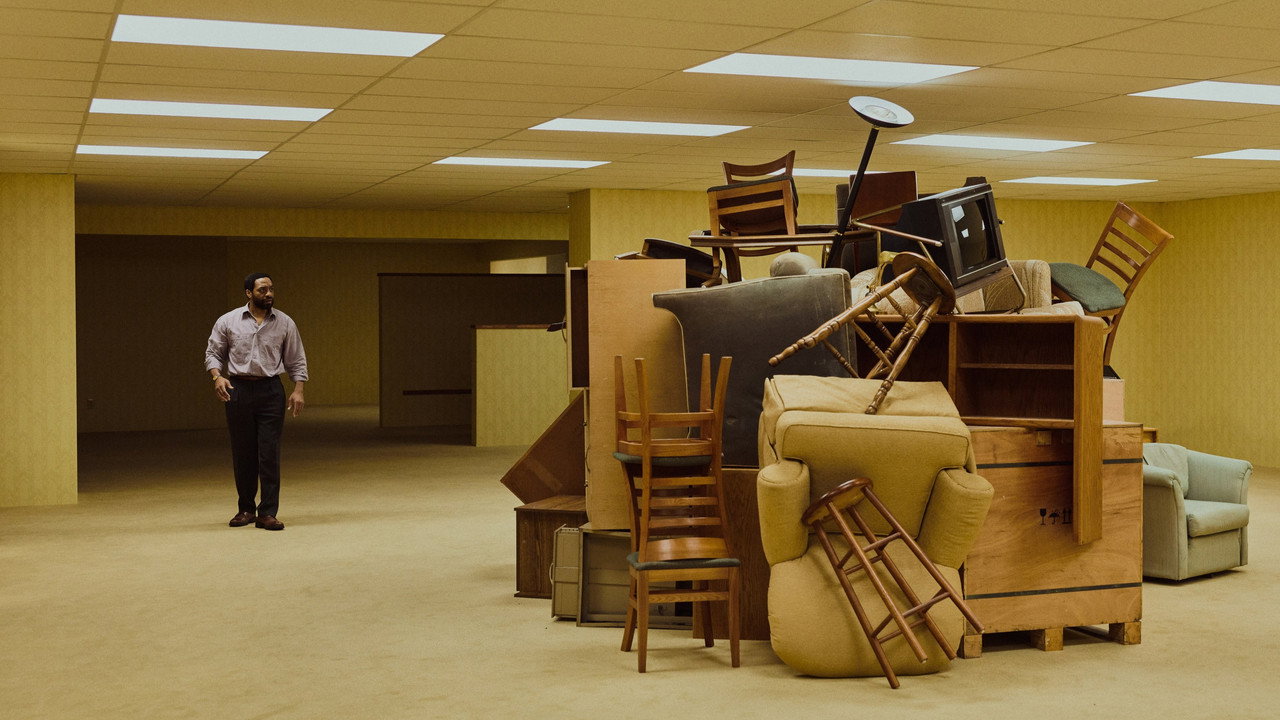
Kane Parsons brings his liminal web series to the screen with Backrooms 2026, a film that leaves many viewers puzzled by its final stretch. Without ruining the early mystery of a doorway in a furniture showroom basement, we can look at how the story closes. The last act pulls Clark, played by Chiwetel Ejiofor, and his therapist Dr. Mary Kline, played by Renate Reinsve, deeper into spaces that resemble his own past. A research organization appears, but instead of answering questions, it adds new ones. The closure is not tidy, and that is intentional.
What Happens
After the midway point, the rooms begin to shift in ways that feel less like a physical place and more like a mind unspooling. Clark encounters figures tied to his childhood trauma and his struggles with alcoholism. The monster that stalks the halls is vague, never fully shown, and the found footage style keeps the viewer at a distance. By the final sequence, the characters reach what seems to be the edge of the other dimension, but the film refuses to confirm whether they escape or simply accept the space. The last image is quiet, surreal, and open.
If you enjoy this kind of ambiguous close, you may also like Eraserhead, a 1977 surrealist work that also trusts the audience to sit with discomfort.
The Meaning Behind the Ending
The conclusion is less about solving a puzzle and more about recognition. Clark's journey through the backrooms mirrors therapy itself: circling the same memories, avoiding the painful ones, and finally facing them. Dr. Kline's presence suggests that healing requires another person to witness the mess. The open ending implies that recovery from psychological wounds is not a door you walk through once, but a space you learn to live inside. The California setting and 1990s details ground the strangeness in something personal rather than cosmic.
Themes You Might Have Missed
Beyond the obvious surrealism, the movie quietly tracks how alcoholism distorts time. Rooms from different decades blend, showing how a person with addiction experiences the past as present. The therapist is not a savior but a guide, and her skepticism early on mirrors the audience's own. Childhood trauma is hidden in plain sight, literally stacked in the liminal offices like forgotten inventory. The based on web series origin means some imagery rewards fans, but the psychological core stands on its own.
For a different take on invisible threats and family fear, Come Play explores a similar blend of childhood dread and unexplained forces.
The Verdict on Backrooms
Our Backrooms review lands on a mixed but thoughtful note. The opening builds real tension with little budget, and the cast keeps the human thread visible. However, the repetitive middle and the late attempt to introduce a scientific group weaken the spell. At 111 minutes, it occasionally feels stretched. Still, the commitment to psychological horror over cheap scares is refreshing. With a rating of 7.009 from 3881 votes, audiences are clearly divided between those who embrace the ambiguity and those who wanted a clearer exit.
Viewers who liked the trapped-alone feeling should try Barbarian, which also uses a strange building to unsettle rather than explain.
Backrooms Quick Facts
- Title: Backrooms (2026)
- Director: Kane Parsons
- Genres: Horror, Mystery, Science Fiction
- Runtime: 111 minutes
- Rating: 7.009/10 from 3881 votes
- Tagline: See how far it goes.
- Main cast: Chiwetel Ejiofor, Renate Reinsve, Finn Bennett, Lukita Maxwell, Mark Duplass, Avan Jogia, Robert Bobroczkyi, Ember Ambrose
- Themes: california, monster, therapist, surrealism, childhood trauma, alcoholism, found footage, 1990s, other dimension, based on web series, psychological, liminal
The film's biggest strength is its mood. The fluorescent halls and distant hum create a sense of being somewhere you were not meant to be. That feeling stays after the credits, even if the plot does not resolve. For a debut feature built from a web series, it takes real risks by trusting silence over spectacle.
One reading of the final act is that the backrooms are not a place at all, but the shared space between two damaged people. Clark's training as an architect hints that he built these rooms in his mind long before he found the doorway. The therapist's role flips by the end: she enters his world instead of pulling him into hers. That reversal is the true climax, quieter than any monster but harder to forget.
Some will find the lack of answers frustrating. Others will see the unfinished quality as honest. Either way, the movie starts conversations, which is more than many larger horror releases achieve. If you go in expecting a maze with an exit, you may leave annoyed. If you go in ready to wander, you might find something personal in the walls.