Agatha Christie's Poirot (1989): Journey From England to Egypt
Hercule Poirot and his sidekicks confront first-class deceptions from England to Egypt in this classic mystery retrospective.
October 22, 2026
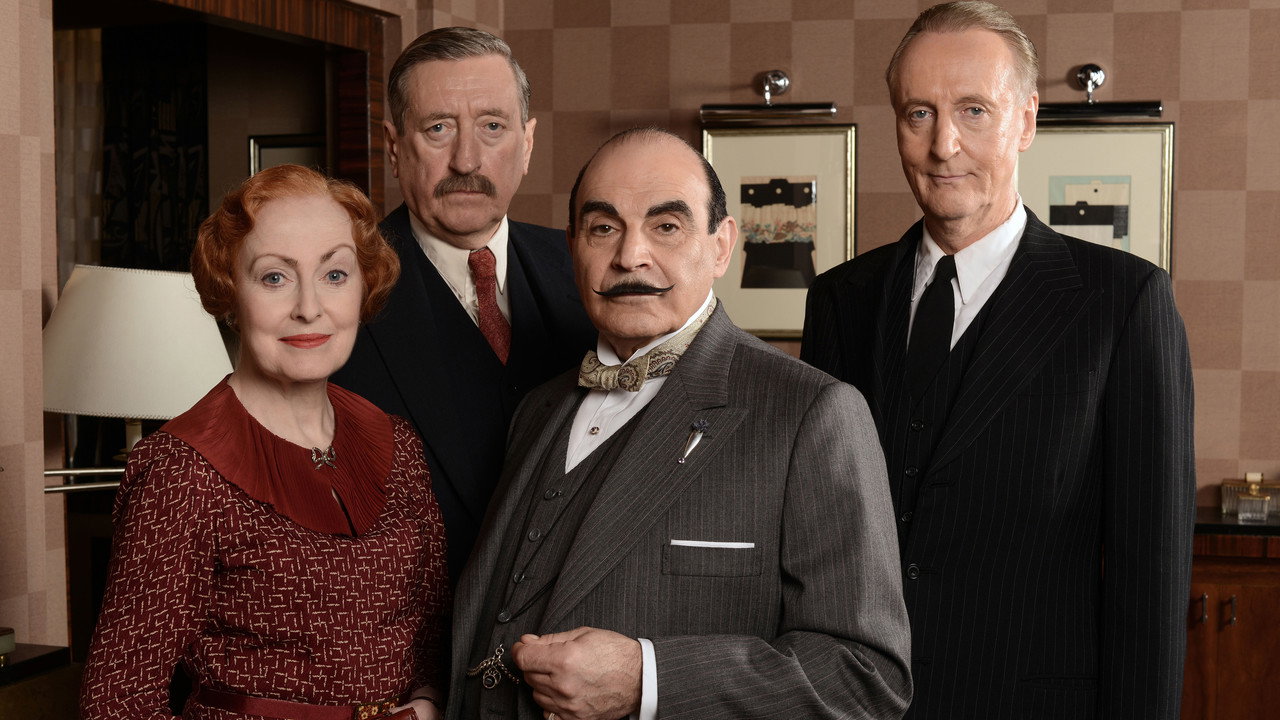
The Ending, Explained
When a long-running mystery program reaches its final revelations, viewers often crave clarity without having the early setups ruined. Our retrospective, Agatha Christie's Poirot ending explained, focuses on the closure that David Suchet’s Belgian sleuth brings to each confounding case. Across the collection of stories that stretch from England to Egypt, the conclusions are never about random chance. Instead, the intelligent yet eccentrically refined detective pits his wits against first-class deceptions and then lays bare the human weaknesses that fueled the crime. The show’s structure as a period drama means that the final act often arrives in a drawing room or a sunlit terrace, where civility masks the tension of exposure.
The final act of the program does not rely on spectacle. It leans on the quiet satisfaction of seeing a private investigator restore moral order in a 1930s world full of suspenseful intrigue. Because the show is based on novels and books, the endings honor the source material’s love of fair-play clues. We will not detail the opening movements of any specific episode, but we can say that the later resolutions emphasize how even the most elegant suspects cannot outthink the little gray cells. The detective’s Belgian heritage, not French as some might assume, gives him a measured outsider’s perspective that sharpens the payoff.
What Happens
The concluding sequences typically gather the trusted circle together. The detective’s elegant and trustworthy sidekicks, including Captain Hastings, Inspector Japp, Miss Lemon, and occasionally the author Ariadne Oliver, bear witness as the truth emerges. The chapter, what happens Poirot ending, is less about a twisted shock and more about the steady unmasking of vanity and greed. Poirot’s method involves isolating contradictions in testimony, then presenting them with polished civility. His companions provide contrast: Hastings offers loyal warmth, Japp brings official grit, and Miss Lemon supplies impeccable organization.
Without revealing any first-act secrets, we can note that the murder mystery format allows each finale to function as a closed loop. The private detective from the United Kingdom’s beloved adaptation demonstrates that investigation is a craft of patience. By the time the culpable party confesses or breaks down, the audience understands the mechanics of the trap that was built around them. The travel from England to Egypt and other locales means the settings shift, but the mental process remains constant and reassuring.
The Meaning Behind the Ending
A resolution in this period drama carries weight beyond the simple naming of a killer. This moment, Agatha Christie's Poirot ending meaning, reflects the triumph of reasoned order over chaotic impulse. The Belgian protagonist treats every life as worthy of justice, regardless of social standing. That philosophical stance gives the final act a gentle melancholy, because the detective must also acknowledge the loneliness of seeing through people’s facades. He values the niceties of life even as he exposes its uglier corners.
Throughout the run, the significance of the finale lies in its affirmation of civilized values. A suspenseful narrative becomes a meditation on trust. When the sidekicks offer their loyalty, the ending confirms that human connection survives even the ugliest crimes. The meaning is not hidden in a twist but in the restored balance of a world temporarily fractured by murder. The detective’s refined tastes and meticulous habits become a metaphor for the cleanliness of truth.
Themes You Might Have Missed
Beyond the obvious whodunit structure, the series rewards careful viewing with softer motifs. The broader narrative, Agatha Christie's Poirot explained, shows recurring ideas about class performance and the masks worn in polite society. Set in the 1930s, the production uses art deco surroundings to hint that modernity itself is a kind of puzzle. The detective’s Belgian identity also subtly comments on the outsider’s clarity within British circles. Themes of detective work and private investigation are woven with a gentle humor that keeps the mood elegant.
Another quiet theme is the value of routine. Poirot’s fastidiousness is not comic relief alone; it mirrors his mental discipline. The investigation episodes frequently contrast messy human emotion with his need for symmetry. If you enjoy such period mysteries with a similar tone, you might also appreciate Signora Volpe, which blends espionage and small-town elegance in a modern setting. The connection lies in the careful uncovering of secrets beneath a polished surface.
Agatha Christie's Poirot: What We Thought
The multi-year broadcast, Agatha Christie's Poirot seasons, earned a strong audience score of 8.202 out of 10 across 593 votes, a figure that speaks to lasting affection. David Suchet’s portrayal is often described as definitive because he inhabited the role for roughly twenty-five years. That longevity means the ending of the entire run feels like a farewell to a friend rather than a mere plot device. The actor’s walking style, moustache care, and disgust at disorder became inseparable from the character.
We admired how the show balanced cozy aesthetics with genuine suspenseful tension. The supporting cast, from the blunt Japp to the capable Miss Lemon, created a working family that elevated each mystery. For viewers seeking another group of formidable women in historical investigation, Frankie Drake Mysteries offers a spirited counterpart set in a different era but with the same dedication to clever detection. Both programs prove that ensemble chemistry matters as much as the puzzle itself.
Agatha Christie's Poirot Overview
This crime, drama, and mystery program presents the intelligent yet eccentrically-refined Belgian detective Hercule Poirot as he travels from England to Egypt alongside elegant and trustworthy companions. The plot summary underscores a collection of first-class deceptions aimed at the private investigator, with each case demanding a fresh application of his skills. Genres include period drama and murder mystery, while keywords highlight the 1930s, United Kingdom, and Belgian heritage. The main cast centers on David Suchet, whose performance anchors the adaptation of novels and books into a unified screen experience.
Themes of detective work, private investigation, and suspenseful revelation run consistently through the stories. The detective’s sidekicks—Hastings, Japp, Lemon, and Oliver—provide a spectrum of support that enriches the procedural format. Those who prefer a lighter touch with a comedic edge might explore So Close! Detective Oshii, a recent series that plays with detective tropes while keeping the investigative core intact. Such comparisons help new viewers appreciate the range of the genre.
Overall, the show remains a benchmark for faithful mystery storytelling. Its endings, when examined thoughtfully, provide both closure and a reflection on human nature. Whether you revisit a favorite installment or begin the journey blind, the detective’s polished reasoning continues to reward patient viewers. The combination of a 1930s backdrop, literary source, and a career-defining performance ensures the program’s place among the finest examples of the murder mystery craft.